Can a mini split cool a whole house in Claremore, OK

Skip collecting and comparing quotes for the new mini split.

Describe it once

Can a mini split cool my whole house here in Claremore?

You've got a mini split, maybe one you're thinking about adding to, and Claremore summers don't let up from May through September. You want to know if that one unit, or a couple of them, can actually carry the whole house through those stretches of heat and humidity, or if you're going to end up with rooms that never cool down right.

Usually not with one indoor unit, but a properly sized multi-zone system can

A single mini split head is built to cool the room it's in, not push air through hallways and closed doors to the rest of the house. In a Claremore summer, with the humidity sitting heavy for months, that one unit will struggle to keep up anywhere past its own room. Whole-house coverage takes a multi-zone system, with an outdoor unit sized to the square footage and a head in each room that needs one, or a ducted mini split paired with your existing layout. Getting that sizing right matters more here than in a milder climate, because an undersized system runs constantly all summer and still leaves rooms warm. This is a load calculation and layout question, not something to guess at.

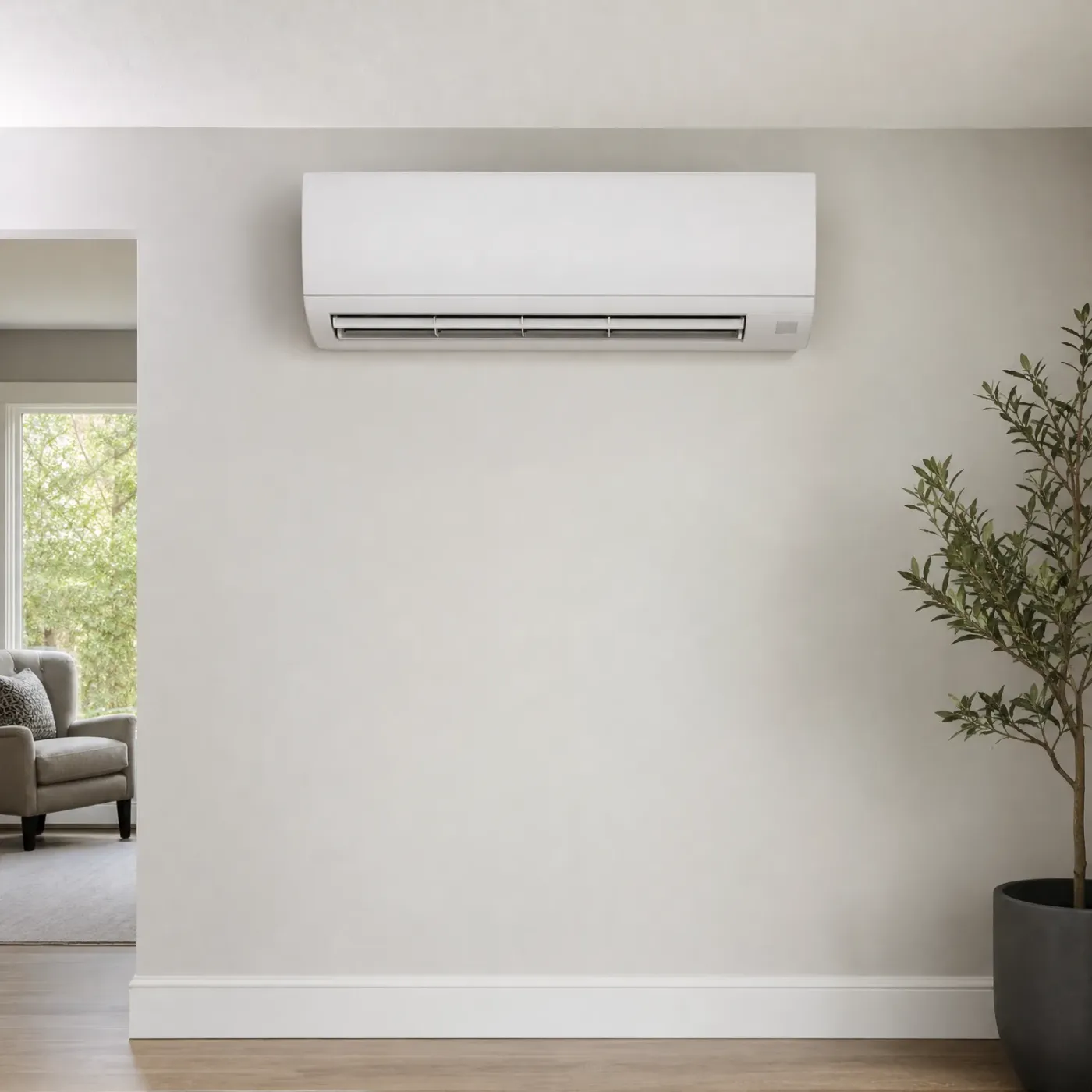
A white wall-mounted mini-split indoor unit high on a beige interior wall, with a potted olive-like tree at right and an armchair and window visible through a doorway at left.

One Room, Done Right

A single mini split head cools the room it's in and the space right around it. Set it where people spend their time and it'll hold that area steady even in August. Ask it to reach three bedrooms down a hall and it falls short, because there's no ductwork to carry that cold air anywhere else.
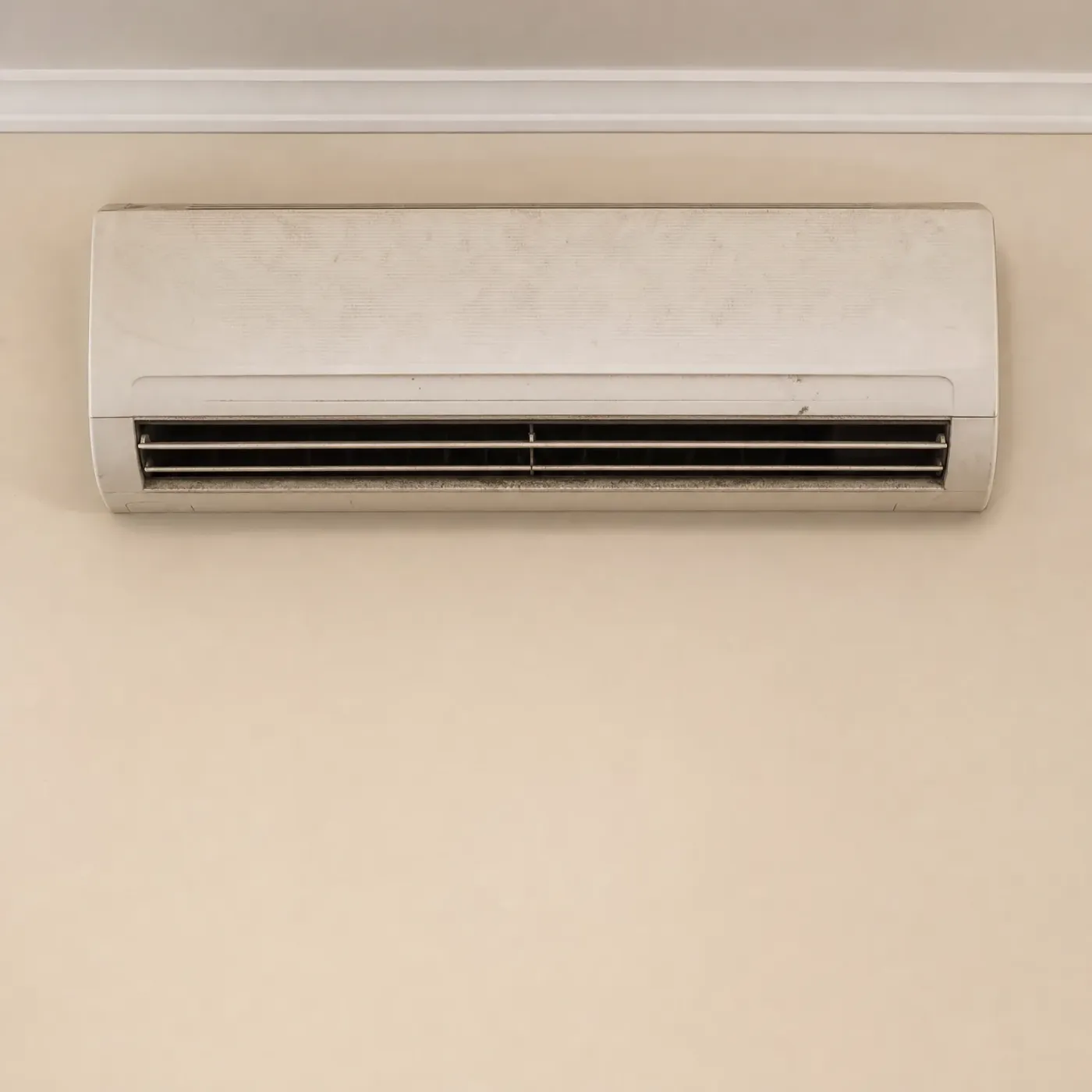

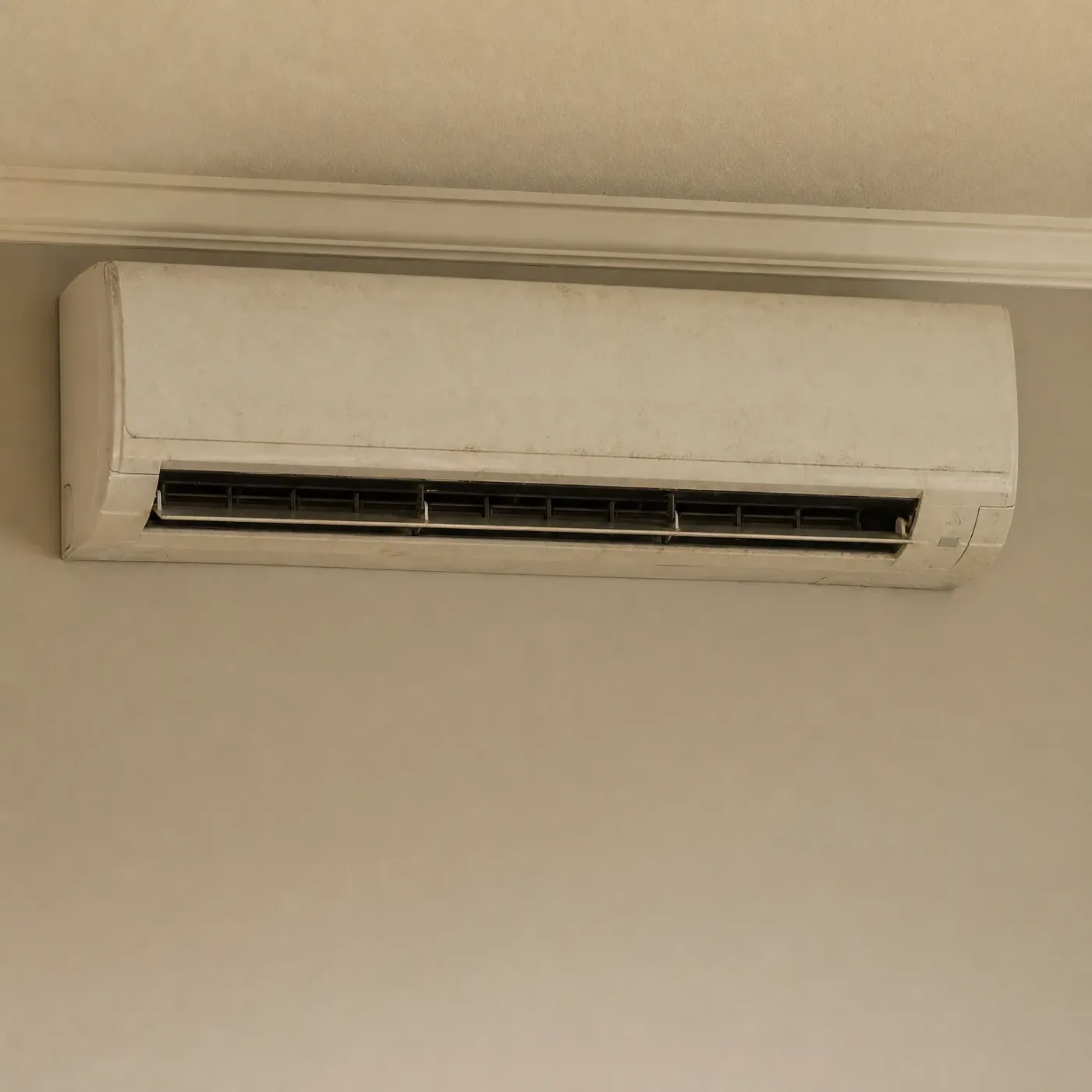
A wall-mounted mini-split air conditioner indoor unit with visible dust and staining, installed on a beige interior wall below white crown molding.

Whole House, Underpowered

A dusty, grimy coil like this one can't move the heat it's built to move. Dirt on the fins acts like insulation, so the unit runs longer and still loses ground on a muggy afternoon. Multiply that strain across a house with one undersized unit trying to cover rooms it was never sized for, and it runs nonstop without catching up.

What does Claremore's climate mean for sizing a mini split system?

  • Cooling runs May through September

    Five months of cooling means a lot of hours asking the compressor to keep up with heat and humidity together, so a system sized for one room won't carry a whole house through August.

  • Heat runs October through April

    Seven months of heat is longer than the cooling season, so whatever you install has to handle both jobs well, not just survive summer.

  • Power here costs 13.72 cents per kilowatt-hour

    At 13.72 cents per kilowatt-hour, a system that's sized wrong, too small and straining or too big and short-cycling, shows up on your bill every month it runs.

NOAA nClimDiv 1991-2020 · EIA-861 2025

Ductless Doesn't Mean One Head

A single zone is one option, not the only one. A mini split system can run several heads off one outdoor compressor, each head serving its own room with its own thermostat. Run a line set to the living room, another to the bedroom wing, and you've got whole house coverage without any ductwork. Rogers County homes that go this route usually land on three or four heads, placed where the house actually divides into separate areas. The outdoor unit sizes to the total load, not to any one room, which is where a qualified installer earns their keep.

Humidity Changes The Math

Oklahoma summers aren't just hot, they're wet, and a mini split pulls moisture out of the air as it cools. That matters for sizing. A unit sized only for temperature can leave a room cold and clammy because it's not running long enough to dehumidify. One sized for Claremore's humidity runs longer, steadier cycles and pulls more water out of the air over a day in July than the same size unit would in a dry climate. Get the sizing wrong either way, undersized or oversized, and the house feels muggy even with the thermostat satisfied.

A gray-haired bearded man in a dark knit sweater sits on a light gray sofa in a sunlit living room, looking to his left, with a framed artwork, a potted palm, and a curtained glass door behind him.
A middle-aged man in a dark green sweater sits on a light grey sofa looking toward a sunlit window, with a wooden shelving unit, lamp and potted plants in the background.
A man in a dark green sweater sits on a light grey sofa in a sunlit living room, looking to his left, with a shelving unit, houseplants, framed art and a large window behind him.
A gray-haired bearded man in a dark green sweater sits on a light gray sofa in a sunlit living room with a potted plant, framed picture, and dark shelving in the background.

One outdoor compressor can serve several rooms at once, but not the way a single window unit works. Each indoor head has its own blower and coil, and its own small sensor reading the temperature right where it's mounted. That's how a bedroom can sit at 72 while the kitchen runs a few degrees warmer, with neither zone fighting the other. The heads don't cycle on and off together either. Each one speeds up or slows its blower on its own, based on what that room needs right then. Refrigerant reaches each head through its own line set, usually run through a wall opening a few inches across, and the thermostat wiring for each zone is separate from those lines. That separation is what lets one zone shut off completely while another keeps running. The part that matters for a whole-house setup is sizing. The outdoor compressor has to be matched to every head running at full output at the same time, in August, not just the biggest room in the house.

How a Multi-Zone System Runs

  • Each indoor head has its own inverter-driven blower and coil, so it adjusts its own speed instead of just cycling on and off like a window unit.
  • One outdoor compressor can run multiple indoor heads through separate refrigerant lines, often called a multi-zone system.
  • Every head reads the temperature where it's mounted, so the bedroom can run cooler than the kitchen at the same time.
  • A multi-zone outdoor unit has to be sized for the combined load of every head running at once, not just the largest room.
  • The line sets carrying refrigerant between the outdoor unit and each head run through a wall penetration, usually no bigger than three inches across.
  • Thermostat wiring is separate from the refrigerant lines, which is why each zone keeps its own setting even when another zone shuts off.
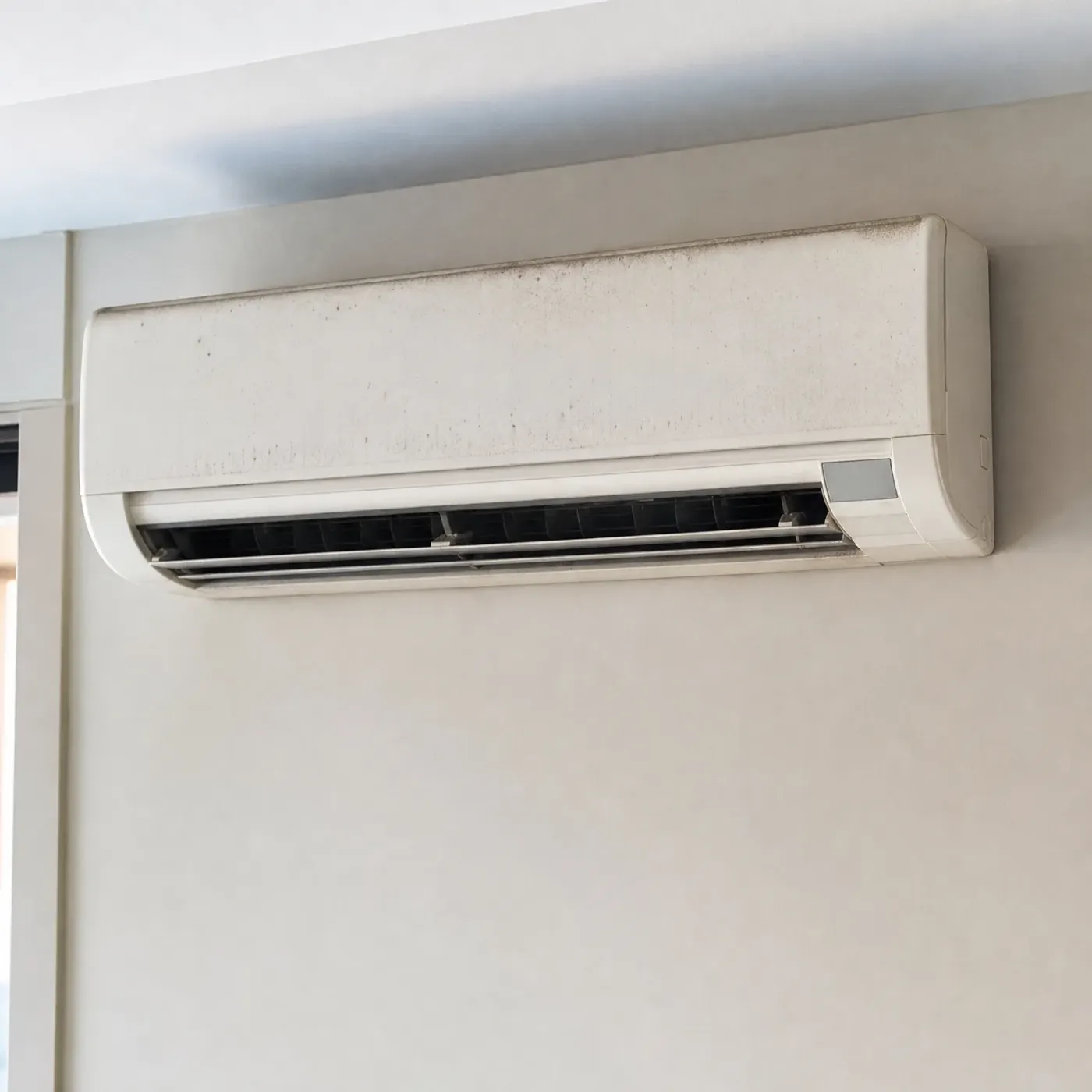
A dusty, stained white wall-mounted mini-split air conditioner indoor unit installed high on a plain off-white interior wall near the ceiling.
Before you get your mini split installation
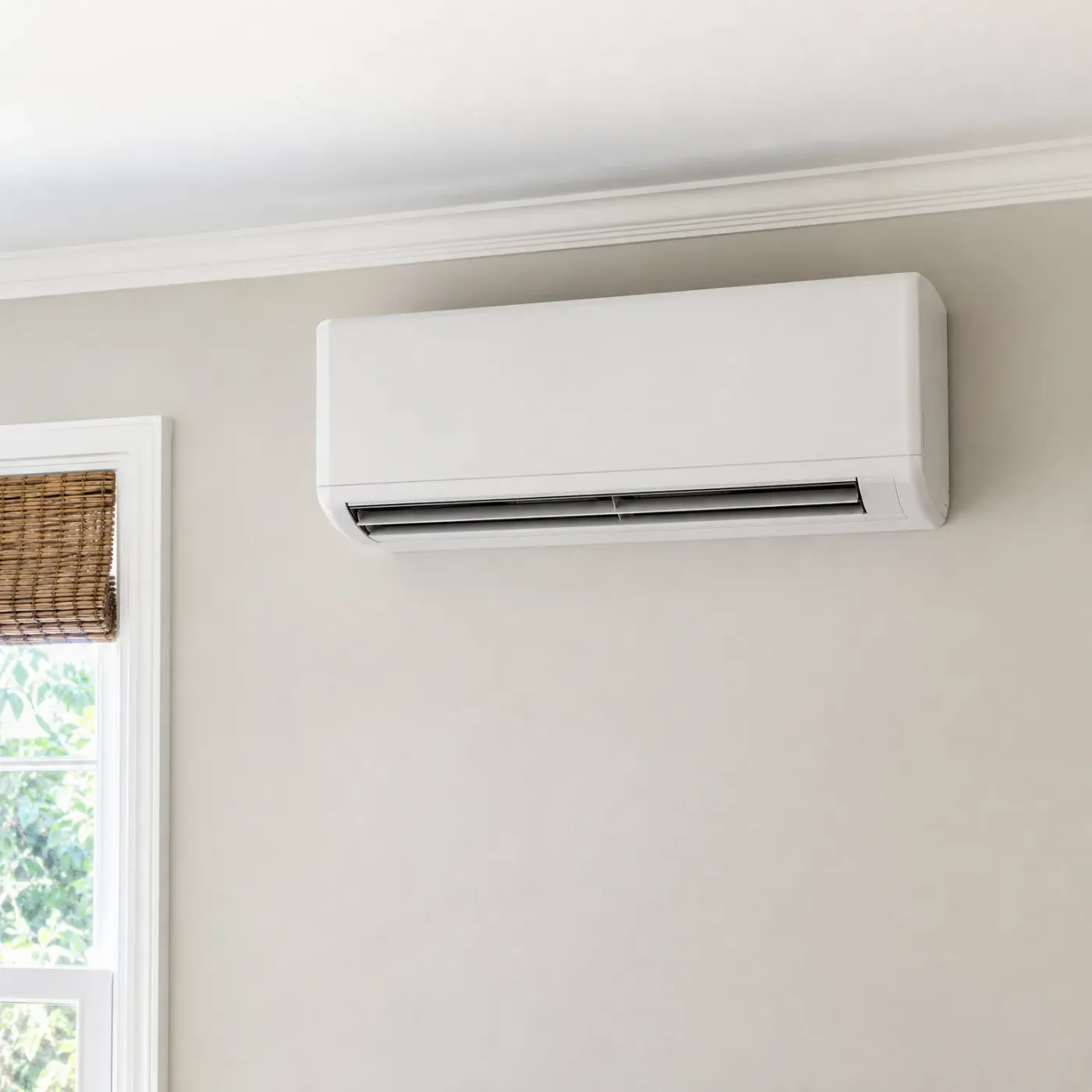
A white wall-mounted mini-split air conditioner unit installed high on a beige interior wall below white crown molding, with a window and woven shade at the left edge showing green foliage outside.
After you get your mini split installation

No calling every shop in Rogers County

Figuring out how many heads your house needs, where the lines run, and what size compressor covers Claremore summers without running flat out from May to September takes someone who installs these systems locally and sees what actually holds up through a Rogers County summer and a cold winter after it. That's not a measurement a homeowner can make from a product listing, and getting it wrong means a room that never cools right or a compressor working harder than it should for years. Instead of calling around to a handful of installers, describing your layout over and over, and sorting through quotes that size the job differently, you put in your details once and a licensed local contractor who works on mini splits every season gets your request. You're not stuck comparing strangers. You're handing a specific problem, your house, your heads, your summer, to someone equipped to size it right the first time.

One head cooling a house built for central air means the rest of the rooms track the outdoor temperature all summer. Upstairs bedrooms in July can sit ten or fifteen degrees above the room with the mini split.

A system sized to the house, with enough heads in the right rooms, keeps every room you actually use close to the same temperature from May through September, not just the one the compressor was matched to.

Cooling runs May through September

Five months of the compressor working hard is a real stretch on a system that's undersized. A mini split sized for the whole house has to hold every room through all of it, not just June. One sized for a single room will show its limits well before September.

NOAA nClimDiv 1991-2020

How a Multi-Zone System Splits Up

  • Each indoor head has its own refrigerant line set, running from a wall or ceiling cassette back to the outdoor compressor.
  • A multi-zone compressor divides its output across heads through an expansion valve at each indoor unit, metering refrigerant to match the load in that room.
  • The inverter in the compressor ramps up or down rather than switching off, so a heavily loaded zone can draw more capacity while others idle.
  • Line sets run through small wall penetrations, usually one per head, which is why the number of heads is set at install and not easily added to later.
  • A condensate drain runs alongside each line set, since every indoor coil produces its own runoff that has to get outside the house.
  • Longer line sets between the outdoor unit and a far bedroom or bonus room lose some capacity, which is part of why head placement matters as much as head count.

A mini split system built for a whole house is really one outdoor compressor feeding several indoor heads, and each head runs its own closed loop back to that compressor. The line set carries refrigerant in one direction and back, and it needs its own penetration through the wall, so a three-head system means three separate runs, not one shared line. At each indoor unit, an expansion valve meters how much refrigerant that head gets, based on what the room is asking for right then. That is how a bedroom holding steady at night and a living room working through a hot afternoon can both get what they need from the same compressor without fighting each other for it. The compressor itself is inverter-driven, so instead of switching fully on and off like a window unit, it ramps its output up or down to match total demand across every zone. Every indoor coil also produces condensate, so each head needs its own drain line running outside, alongside its refrigerant lines. Distance matters too. A head in a bonus room or a bedroom far from the outdoor unit loses some capacity over that longer run, which is why a contractor sizing the system looks at where the outdoor unit sits, not just how many rooms need a head. Because the line sets are set into the walls at install, adding a head later means opening up a wall again, not just ordering another unit.

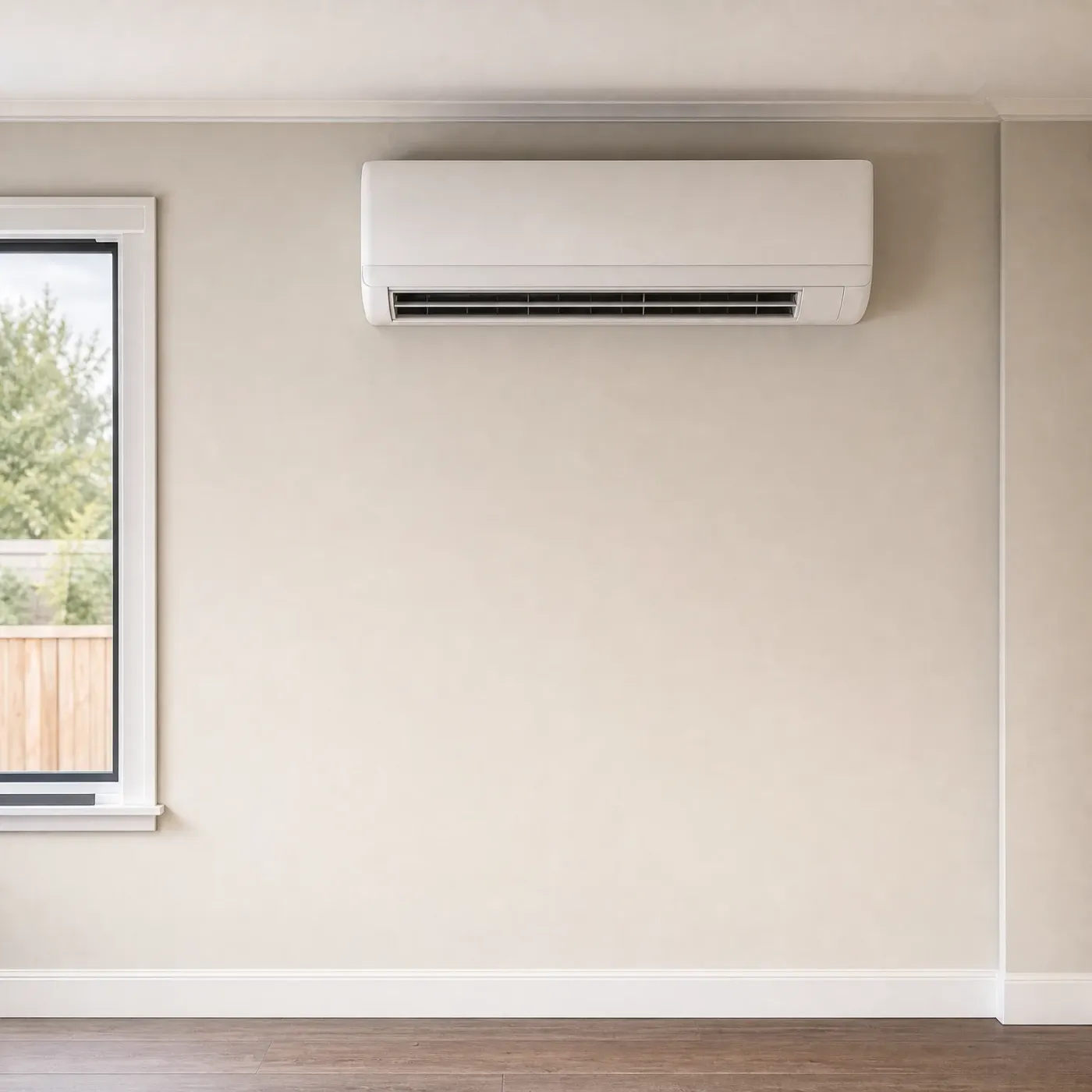
A white wall-mounted mini-split air conditioner on a beige interior wall, with a window at left showing trees and a wooden fence, and dark wood flooring below.
A mini split sized to the room it's in keeps that room steady through a Claremore summer without strain.
A white wall-mounted mini-split air conditioner indoor unit with dark louvered vents, installed near the ceiling on a beige wall below white crown molding.
A mini split asked to cover a whole house it was never sized for falls behind once the heat sets in.

If the mini split in your house only covers the living room, you already know what the rest of the place feels like by July. The bedrooms stay warm enough that you run a box fan at night, the upstairs hallway feels thick when you walk through it, and the thermostat for your gas furnace or whatever backup you have barely helps because it isn't tied to the mini split at all. You end up running a window unit in one bedroom and closing doors to keep cool air where you can get it. That's not a sign the technology failed you. It's a sign the one head you have was sized for one room, not your square footage. A system built for your whole house, with heads placed where people actually sleep and sit, carries that same muggy stretch from May to September without you shutting doors or adding a second appliance to make up the difference.

A woman with shoulder-length graying brown hair in a cream knit cardigan sits in a dark armchair indoors, looking off to the side with a slight smile, with a shelf, window and houseplant blurred behind her.
A woman with dark hair in a bun sits on a sofa with a child resting his head on her shoulder, both wrapped in a cream knit blanket, with a lit lamp and bookshelf in the dim background.
  1. A tech walks the house and counts the zones it needs.

  2. Line sets run from each room back to one outdoor compressor.

  3. The compressor pulls a vacuum to clear the lines of air and moisture.

  4. Each indoor head gets mounted, wired, and its line set connected.

A closed silver laptop and a glazed ceramic mug on a wooden table, with a blurred kitchen counter, potted plant, cutting board and window in the background.

So, can one mini split cool the whole house

A single head covers the room it's in and not much past it. Covering the whole house takes a system sized that way from the start, with enough heads and enough compressor to carry every room through a Claremore summer, not just the one with the unit mounted on the wall.

That's a sizing job, not a guess. It means someone walking your rooms, counting zones, and matching a compressor to what your house actually needs in July and August. Instead of calling around Rogers County for quotes and explaining your layout to three different companies, you get matched with one local contractor who installs these systems every season and knows what a Claremore summer asks of them. You tell your story once, to someone qualified to act on it.

Interior corner with sheer white curtains at a window, a brown upholstered sofa in the foreground, and a wooden multi-drawer cabinet holding a round ceramic vase with leafy branches.
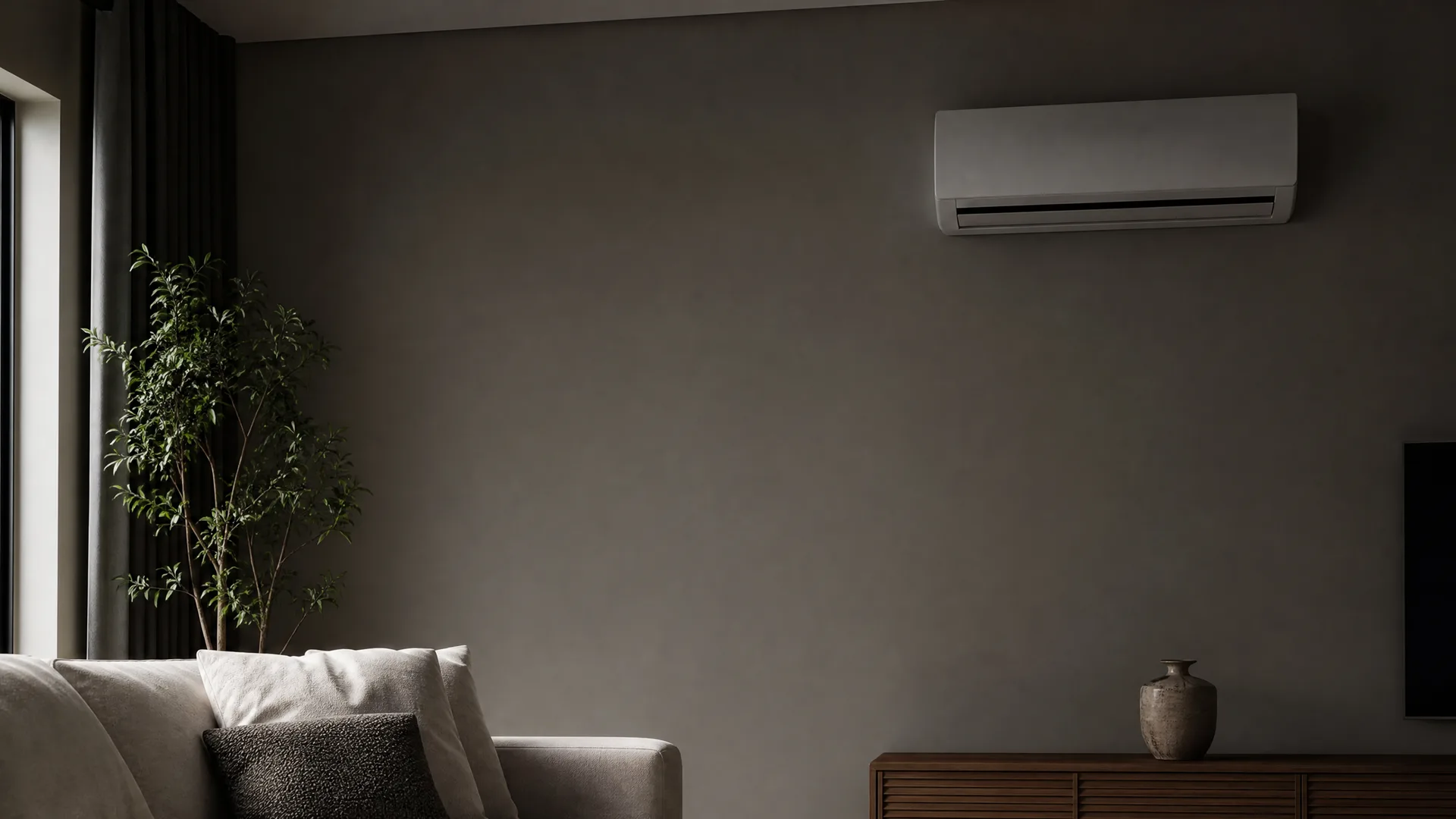
A dimly lit interior with a white wall-mounted mini-split air conditioner on a grey-brown wall, a beige sofa with cushions, a potted indoor tree by a window, and a wooden sideboard holding a ceramic vase.

No quotes to chase

The pro who gets in touch is licensed in Oklahoma and works in Rogers County.

Step 1 of 3: Equipment