Is a mini split worth it in Claremore, OK

Get matched with a pro who works on mini splits in Rogers County.

Get matched

A mini split is worth it in Claremore if you're using it to cover a room your furnace and central air don't handle well, like a garage, a bonus room, or an addition. On its own, it won't replace a furnace here. Winters get cold enough that most homes still need gas heat to carry the house through January, and a mini split works best as backup or supplemental heat for one space rather than the whole home. Where it earns its keep is summer. Claremore summers run hot and muggy for months, and a mini split cools and dehumidifies a single room without forcing your central system to fight to keep up everywhere at once. If you're heating or cooling a space that's hard to reach with ductwork, or one that's always been too hot or too cold no matter what the rest of the house does, a mini split solves that directly instead of asking your whole system to compensate.

Does a mini split actually pay for itself here?

  • Cooling runs May through September

    Cooling runs May through September, so the mini split carries that room on its own for five months before your central air would've kicked in anyway.

  • Heat runs October through April

    Heat runs October through April, seven months of the year, which is why a mini split alone won't keep up and most homes still lean on the furnace.

  • Power here costs 13.72 cents per kilowatt-hour

    Power here runs 13.72 cents per kilowatt-hour, close to the national average, so a mini split's efficiency saves you something but won't swing a bill on its own.

NOAA nClimDiv 1991-2020 · EIA-861 2025

Use it to cover the room your main systems struggle with, and it earns its keep most of the year without you thinking about it.

Try to make it your only source of heat through a Rogers County winter, and you're asking one wall unit to do a furnace's job when it's coldest outside.

An older man with gray hair and a beard, wearing a dark coat dusted with snow, stands smiling in a doorway of a warmly lit home with a sofa, lamp and window visible behind him.
An older man with grey hair and a beard, wearing a dark coat dusted with snow, stands in a dimly lit entryway with a ceiling lamp, a side table with two shaded lamps, and a lit fireplace visible in a room beyond.
A bearded older man in a dark snow-dusted coat and scarf stands just inside a home's front door, with a lamp-lit room and snowy window visible behind him.
An older man with gray hair and a beard stands in a doorway of a home, wearing a dark coat dusted with snow, with a lit fireplace and lamp visible in the blurred room behind him.

Why it holds up in July heat

A mini split cools by moving heat out of the room, not by fighting its way through ductwork that loses cold air before it reaches a bonus room over the garage. That's why it handles a room central air struggles with. The outdoor unit is rated to keep working in heat well past anything Rogers County sees in August, so you're not losing capacity on the hottest days. Because it's cooling one room instead of the whole house, it cycles less than you'd expect for the square footage. That's also why it holds a steady temperature in a room that used to swing five or ten degrees between visits from the thermostat upstairs.

What the cold months ask of it

Below freezing, a mini split still produces heat, but it has to work harder for the same output, and most units lose capacity somewhere in the teens or lower. Rogers County sees stretches like that most winters. That's the gap a furnace fills for the rest of the house, and why the room with the mini split should be one you'd heat with it even on a night that calls for a jacket indoors. If that room stays comfortable in January, it's doing its job. If it can't keep up on the coldest nights, that's expected, not a sign anything's wrong with it.

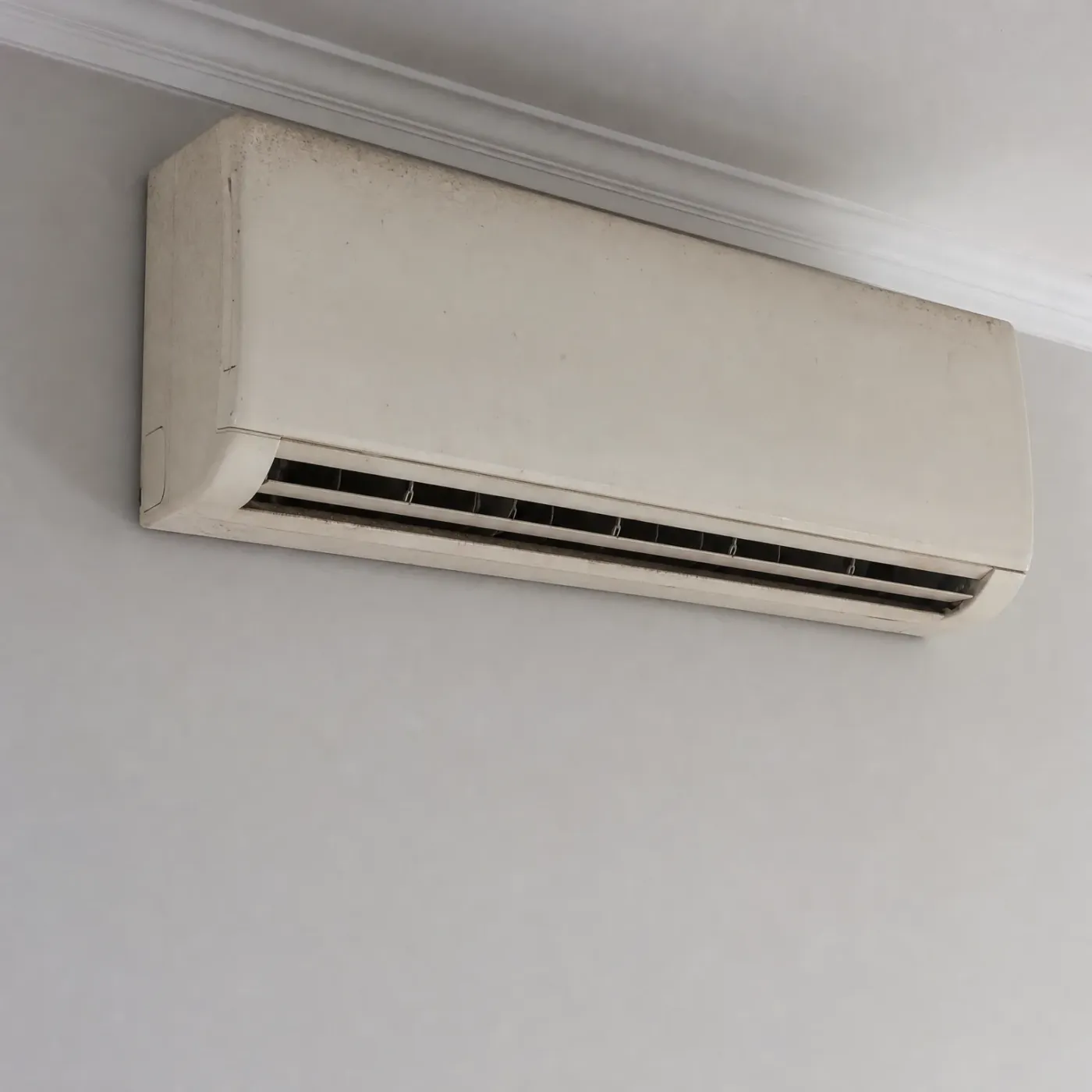
A wall-mounted mini-split air conditioner indoor unit with a dusty off-white casing and dark lower vent, installed high on a plain light-colored wall below a ceiling molding.
Before you get your mini split installation
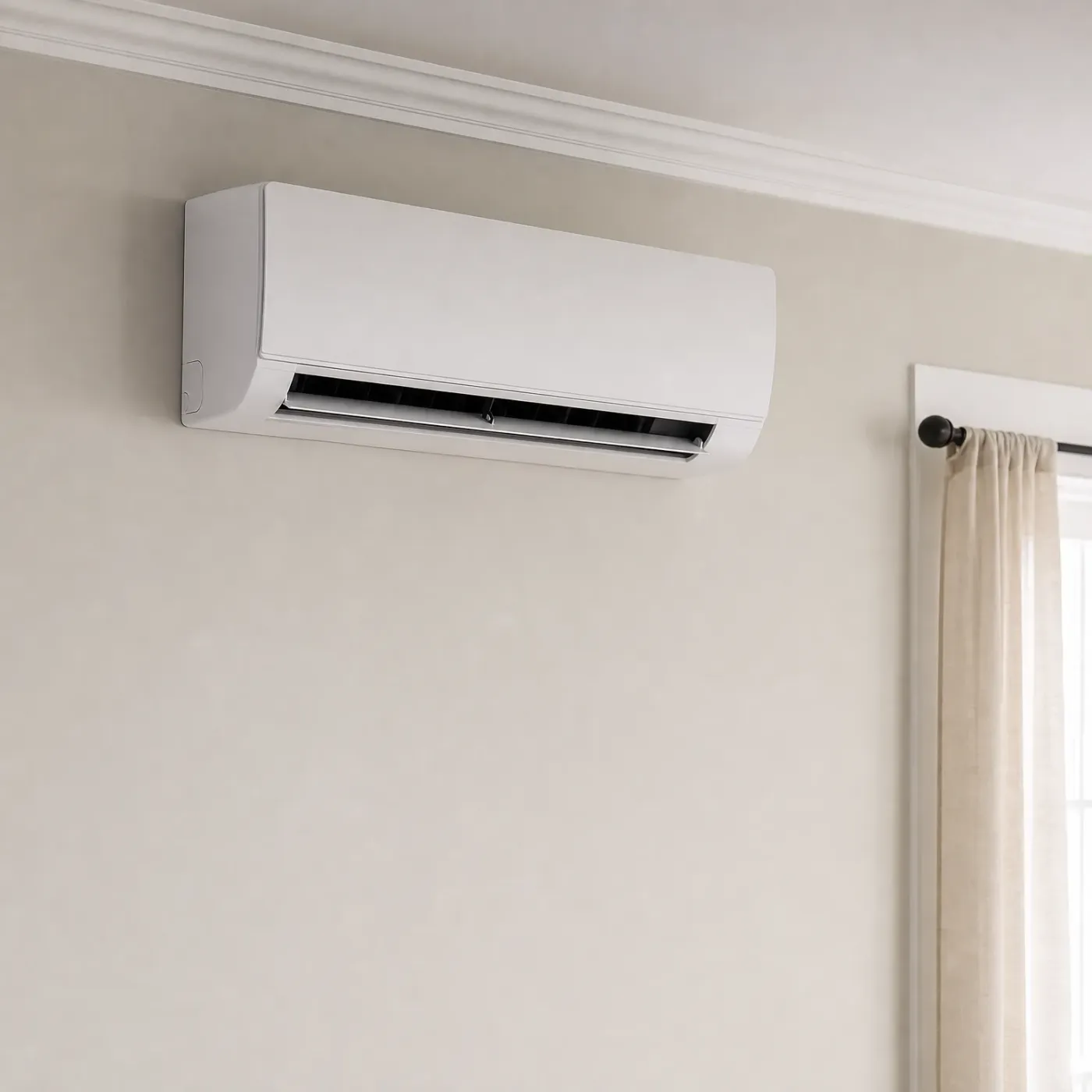
A white wall-mounted mini-split air conditioner installed high on a beige interior wall below crown molding, with a window and light curtain on a black rod at right.
After you get your mini split installation

A mini split moves heat instead of burning fuel or straining to push cold air through ducts. The outdoor unit and the indoor head talk to each other through a refrigerant line, so there's no duct run losing air on the way to a bonus room or a garage. Inside, the compressor is inverter-driven, which means it ramps up and down to hold the room steady rather than cycling fully on and off the way a window unit does. That's part of why it can sit there quietly running most of the day without spiking your power use the way a straining system would. When temperatures drop below freezing, the outdoor unit pauses on its own to run a defrost cycle, clearing frost off the coil before it goes back to heating. The indoor head reads the air in that room directly, so it answers to what's actually happening there, not a thermostat somewhere else in the house. The one thing worth watching yourself is the indoor filter. Let it clog and the unit loses capacity before anything else goes wrong.

How a mini split actually works

  • The outdoor unit and the indoor head are connected by a refrigerant line, not ductwork, so nothing is lost moving the air to the room.
  • An inverter-driven compressor adjusts its speed to match the room's load instead of switching fully on and off like a window unit.
  • Below freezing, the outdoor unit runs a defrost cycle that briefly reverses to clear frost off its coil before going back to heating.
  • The indoor head reads the room's air temperature directly, so it responds to that one room rather than a thermostat somewhere else in the house.
  • A clogged indoor filter cuts airflow across the coil, which is the most common reason a mini split loses capacity over time.
  • The remote or wall control lets you set a schedule for that one room without touching the furnace or central air settings for the rest of the house.
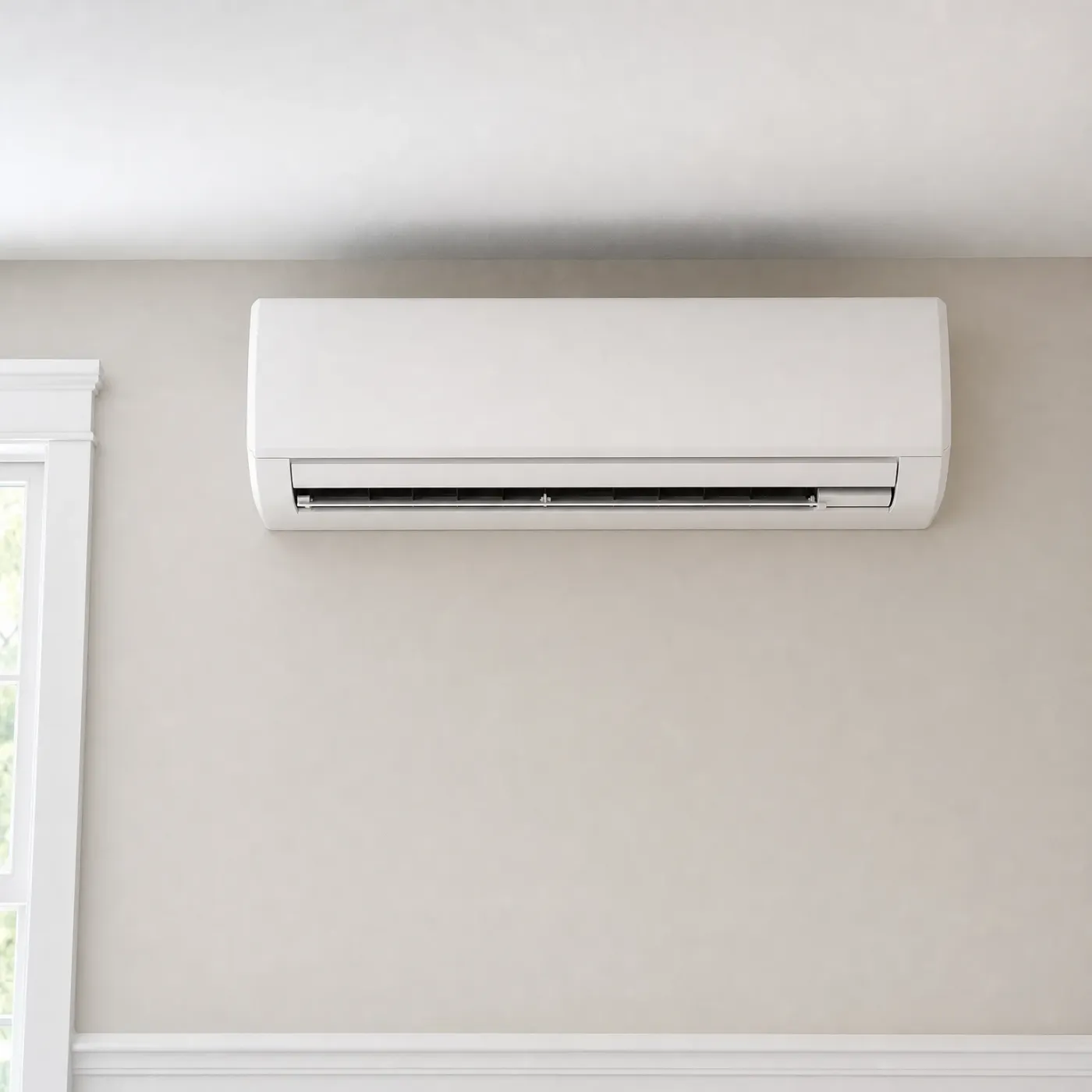
A white wall-mounted mini-split air conditioner installed high on a beige interior wall near the ceiling, with a white-framed window at the left edge.
A clean mini split moves air freely and cools or heats the room the way it's supposed to.
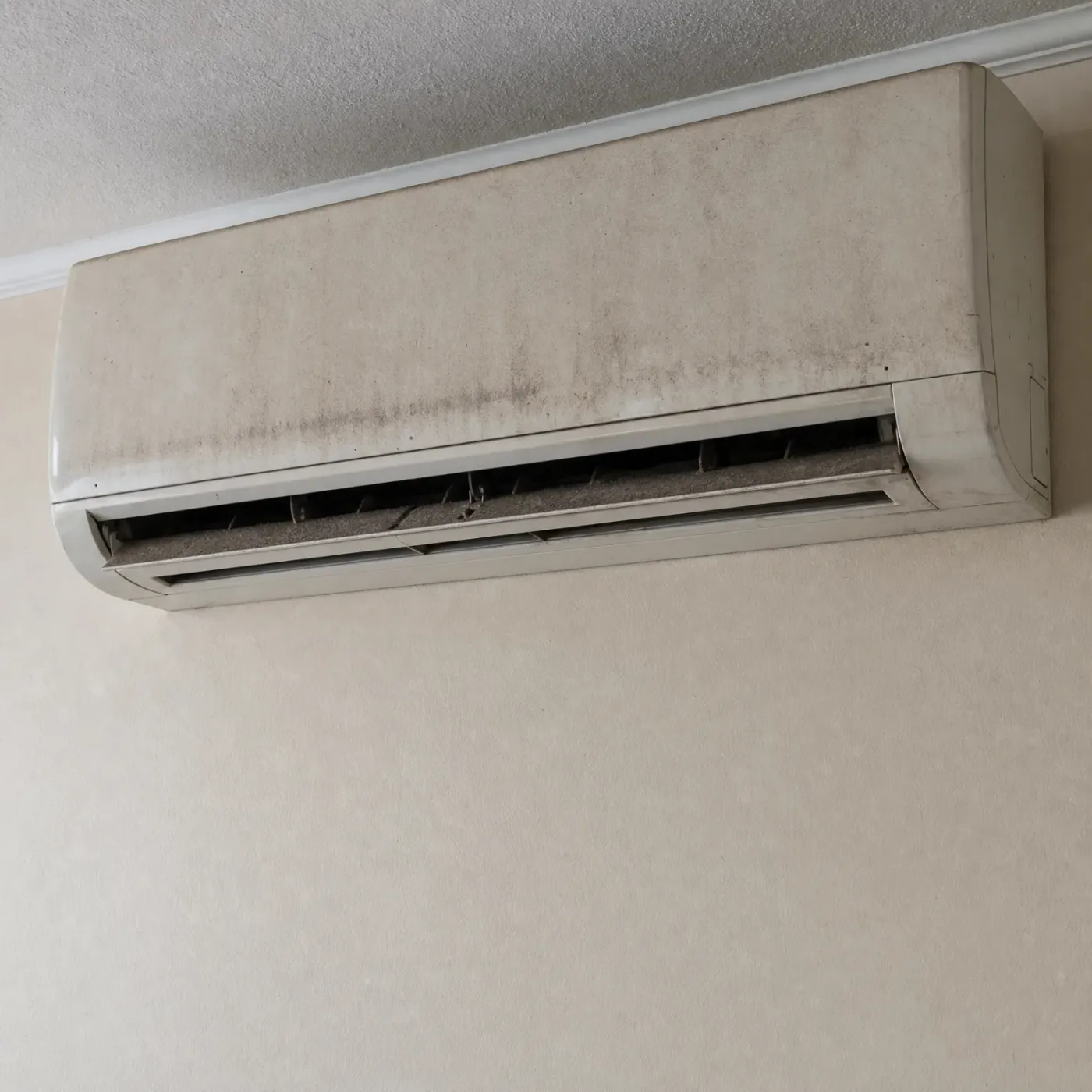
A dusty, stained wall-mounted mini-split air conditioner indoor unit near the ceiling on a plain beige wall, with visible lint buildup at its intake grille.
A filter clogged with dust and grime cuts airflow and lets mold build up inside the unit.
A two-story house with beige horizontal siding, stone veneer at the base, dark shingled gable roofs and a concrete walkway leading to the front door, set behind a patchy green lawn under a clear blue sky.

Summer air in Rogers County carries a dew point that averages 68°F across June, July and August, according to National Weather Service climate data. That's the sticky range where air feels heavy even when the temperature itself isn't that high. Your mini split doesn't just cool that room, it pulls that moisture out of the air as it runs, which is why the space feels dry and comfortable instead of damp. A unit sized and installed right for your room handles that load without running constantly. One that's undersized or poorly matched will run long cycles and still leave the air feeling thick. A local contractor who installs these year-round in Rogers County homes knows what size and setup that muggy stretch actually calls for, and you'll hear from just that one contractor, not a handful competing for your business.

NASA POWER T2MDEW

Get matched with a mini split pro in Rogers County

You've read what makes a mini split worth it here and what it takes to keep one running right. The part left is matching the install to the room it actually has to handle, the garage, the bonus room over it, the addition the ductwork never reached. That sizing decision is where installs go wrong, a unit too small for the space runs constantly and never quite keeps up, one too large short cycles and leaves the room damp even when it's cold. A contractor who installs these across Rogers County every summer and winter has seen which rooms in which kinds of homes need what size, and which placement on the wall actually moves air through the space instead of past it. That's not something you can check from a spec sheet. Getting matched with someone local who does this work routinely means the unit gets sized to your room, not to a guess, before it ever gets mounted.

What Changes In Your House

  • A bonus room over the garage that used to sit ten degrees warmer than the rest of the house stops being the room nobody uses in July.
  • Your gas furnace keeps carrying the main house all winter, so your gas bill reflects that, not whatever the mini split is doing in one room.
  • The room the mini split covers stops showing up on your central air's ductwork as the hardest zone to satisfy, so the rest of the house cools faster.
  • If the mini split's filter goes uncleaned, you'll notice the addition feels muggy again even though the unit is still running.
  • A mini split left off for months over winter still needs its outdoor unit checked before summer, since leaves and debris settle into it even when it's idle.
  • The one room it covers stops costing you a space heater in winter and a window unit in summer, since one system does both now.

The clearest sign a mini split is working is the room it's in stops being the one you avoid. A bonus room over the garage, an addition off the back of the house, whatever space ran hot in July and cold in January now holds a normal temperature without you thinking about it. Your gas furnace still does the real work of heating the rest of the house through a Rogers County winter, so your gas bill moves with that, not with what the mini split is doing in one room. Your central air gets a break too. That one hard-to-satisfy room was likely pulling the rest of the ductwork's capacity toward it, so once it's covered on its own, the rest of the house keeps up faster. What you'll notice if something's off is the filter. A dirty filter doesn't shut the unit down, it just stops it from pulling the moisture out of the air, so the room goes muggy again even with the unit running, and that's usually the first thing worth checking before assuming the system itself has failed. Over winter, if you leave the unit off, the outdoor half still sits outside collecting leaves and debris, so it's worth having someone look at it before the first hot week asks it to work. And the room itself stops needing a backup, no space heater dragged in for January, no window unit wedged in for August, because now one system is doing both jobs.
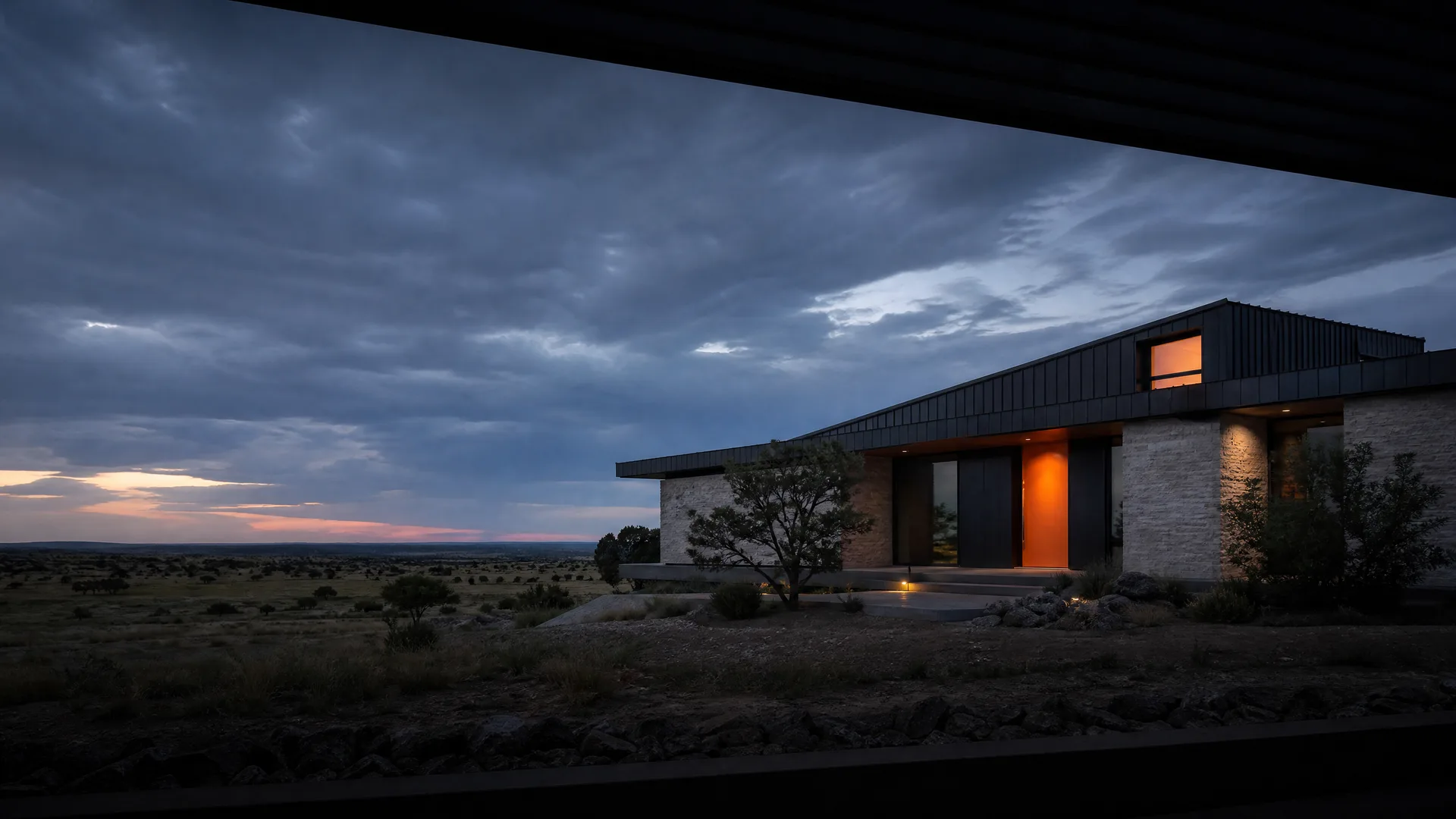

Cooling runs May through September

Five months of cooling means that bonus room or garage addition leans on the mini split from May right through September. Set it and forget it for that stretch, since your central air was never reaching that room anyway.

NOAA nClimDiv 1991-2020

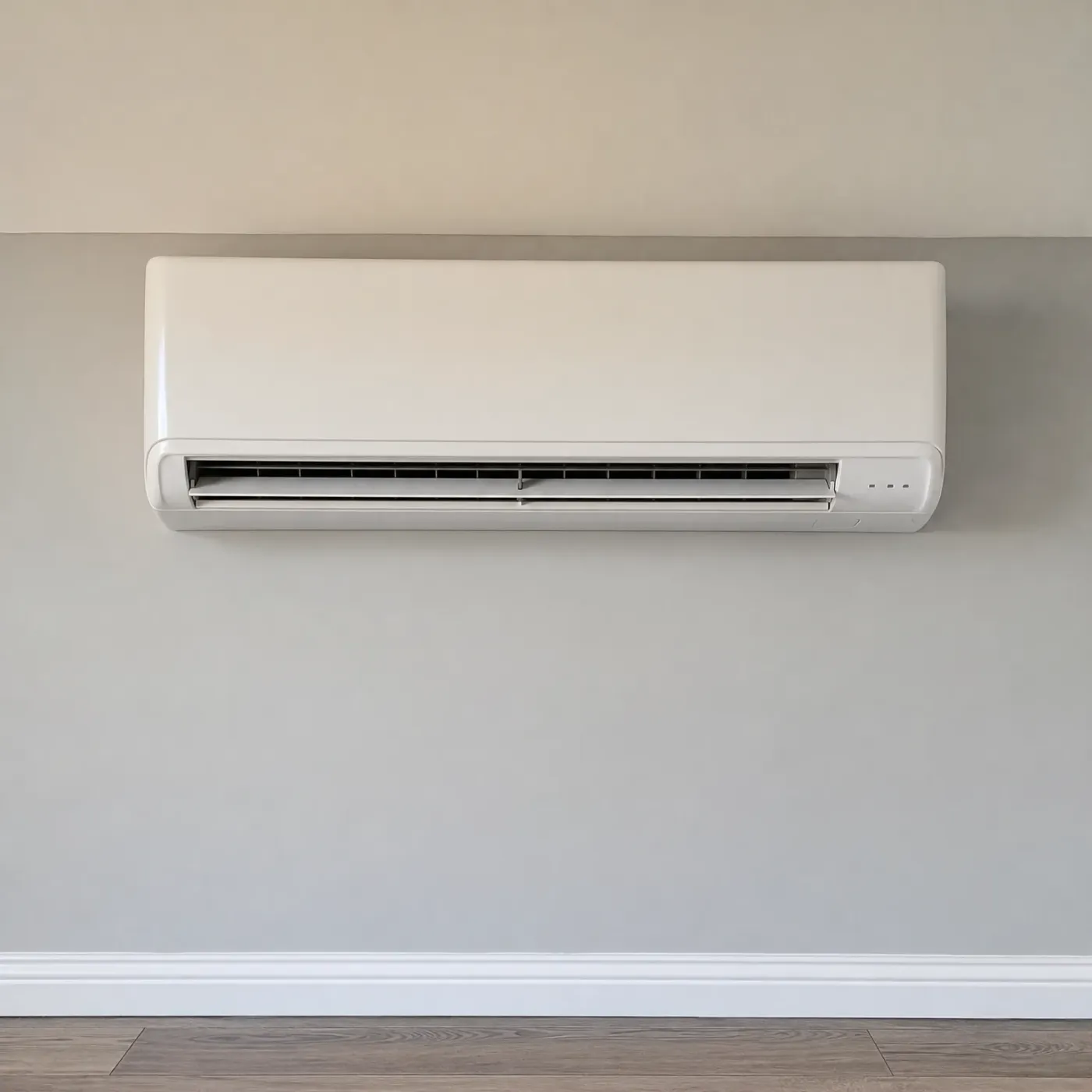
A white wall-mounted mini-split air conditioner indoor unit on a light gray wall above a white baseboard and wood-look floor.

Running the way it should

That horizontal vane opens and closes to aim the air where the room needs it, and the panel on the side tells you it's reading the room correctly. A mini split working like this is quiet, and the air coming off that vane is steady, not warm in spots and cold in others.

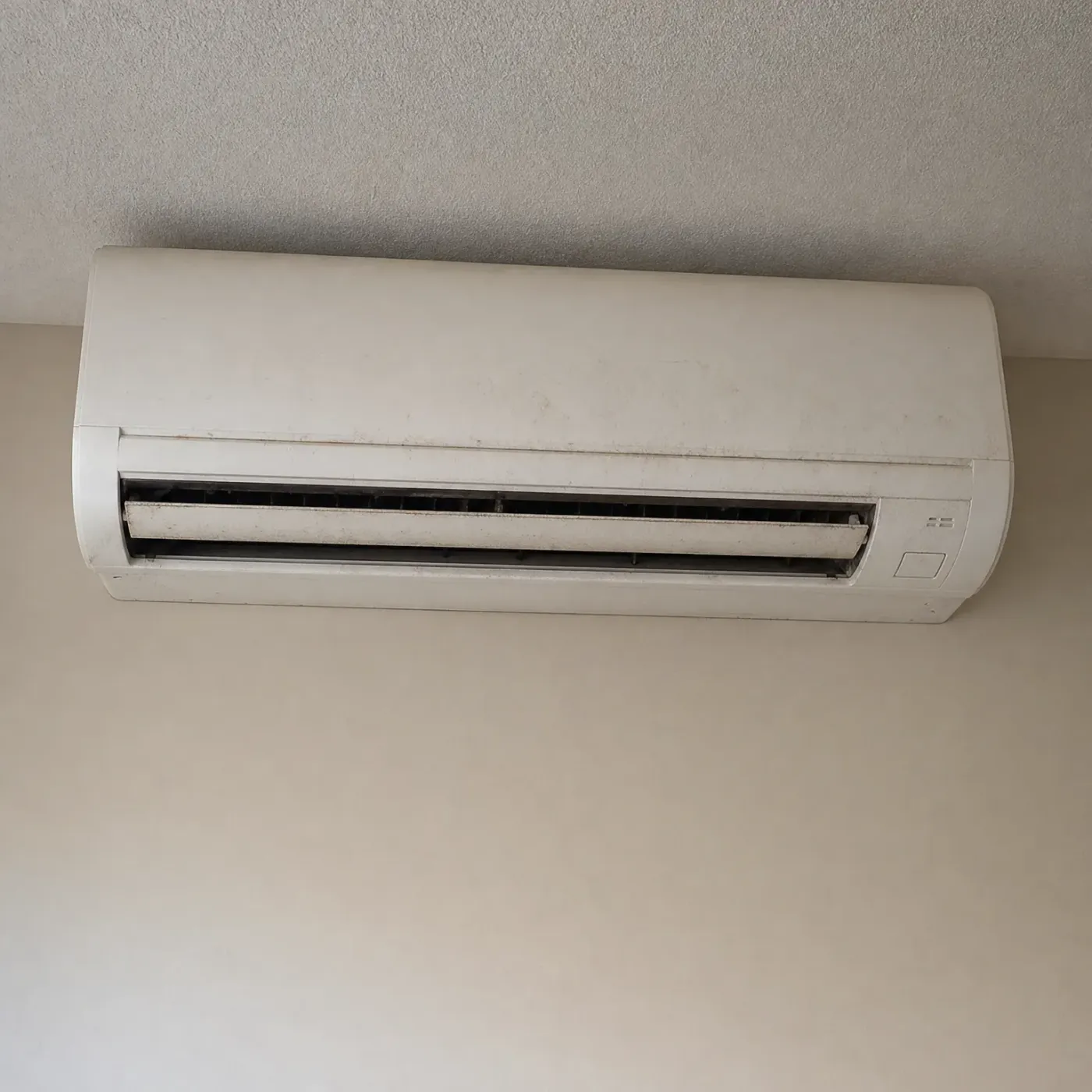
A white wall-mounted mini-split air conditioner indoor unit installed near a textured ceiling on a plain beige wall, with visible dust and discoloration on its casing and vent.

Grime cuts into what it can do

Dust built up on the housing like this means the filter behind it is worse off, and a clogged filter cuts the airflow the unit can move. Left like this, the coil underneath picks up the same grime, and the room it's supposed to cover stops getting the air it needs.

A woman in a gray sweater and jeans stands in an open wood front door of a white stucco house while a man in a dark jacket walks toward her on the entry path.

So is it worth it

For the room your furnace and central air don't reach, a mini split in Claremore earns its keep. Five months of cooling, most of a winter spent as backup heat for that one space, and a filter you keep clean is the whole deal. It was never going to replace your furnace, and it doesn't need to.

If you're past deciding and ready to get the room sized up right, a local contractor who installs these across Rogers County every season knows which rooms give mini splits trouble and which ones they handle easily. You'd be matched with one contractor, not a handful calling at once, and they'll reach out to look at your specific room before anything gets installed.

A speckled beige ceramic vase holding thin dried branches sits on a round wooden table near a window with sheer curtains, with a dark upholstered chair and draped blanket blurred in the background.
A woman wrapped in a thick cream knit blanket sits in an armchair beside a lit table lamp, with an open book in the foreground and a frost-covered window behind her.
A bearded man in a plaid flannel shirt stands indoors looking out a frost-covered window, with a steaming dark blue mug on the wooden sill and snow-covered trees outside.

Mini Split Installation

Find a mini split installation pro in Rogers County

A licensed pro who works in Rogers County gets your request.

A black-framed smartphone standing upright against a plain light gray background, its screen filled with solid green.
Step 1 of 3: Equipment