A white wall-mounted mini-split indoor unit near the ceiling of a dimly lit room, with a curtained window at right, a leafy potted plant at lower left, and a cushioned sofa at the bottom.

One request and it's handed off

Mini split leaking water in Tulsa, OK

Water dripping or pooling under your mini split usually means a clogged condensate line, a dirty filter, or a drain pan that's full. In Tulsa's humidity, these units pull a lot of moisture out of the air, and that drain system has to keep up. This page walks through what's likely causing it and what to check before water damages your wall or floor. Once you've sent the form, you're done tracking down a contractor who works on mini splits.

Hand it off

Water coming from your mini split almost always means the condensate drain line is clogged or the filter is dirty enough that the coil froze and is now thawing onto the floor. The indoor unit pulls moisture out of the air constantly, and that water has to travel down a small drain line to get outside. Algae, dust, and debris build up in that line over time and block it, so the water backs up into the drain pan and spills over instead of draining away. A dirty filter causes a different version of the same problem: it chokes airflow across the coil, the coil ices up, and when the unit cycles off or you turn up the fan, that ice melts faster than the pan can handle. Either way, the leak is a sign the unit is working against something blocking it, not a sign the unit itself is failing. Left alone, it can damage the wall or floor underneath and let mold start in the pan or line.

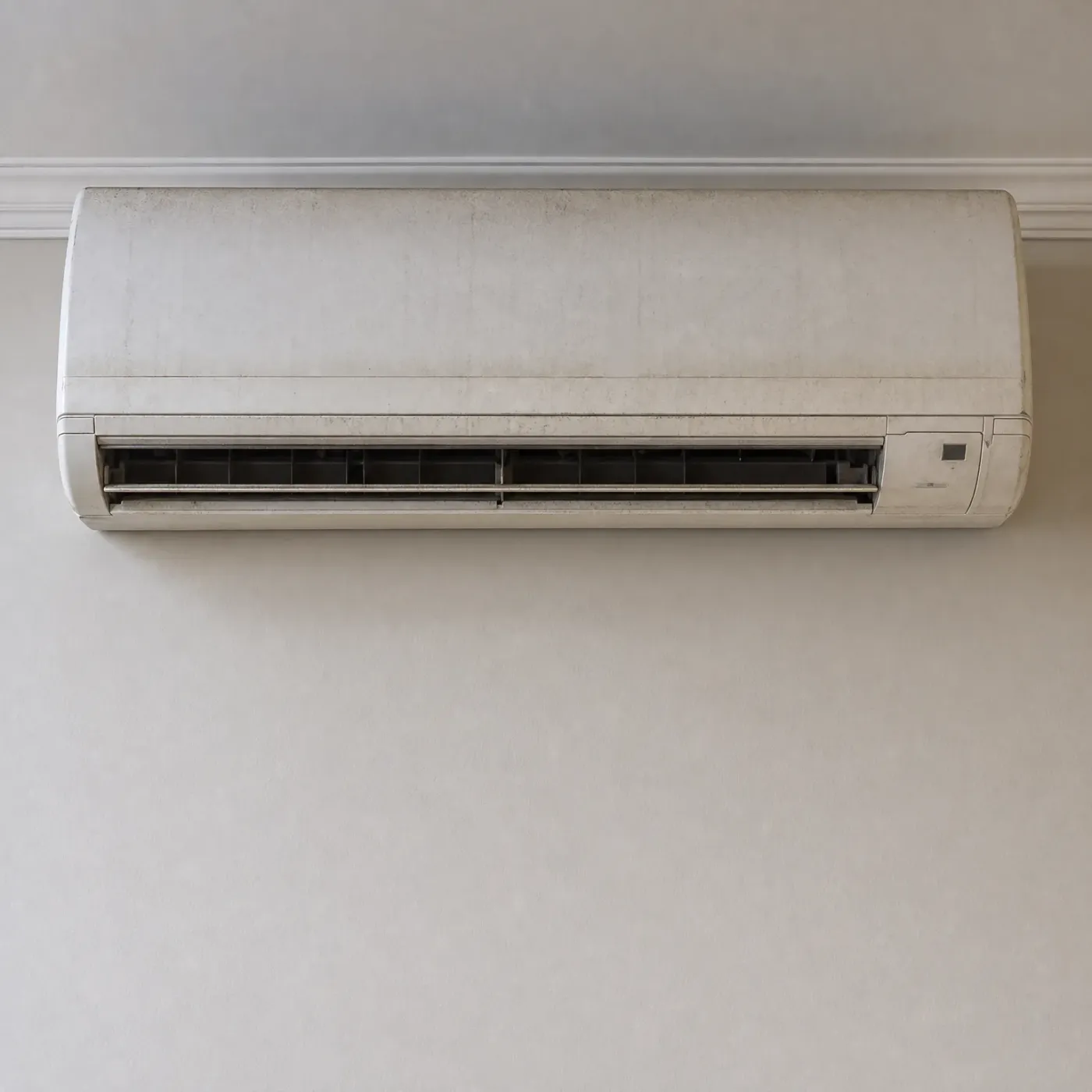
A white wall-mounted mini-split air conditioner indoor unit with visible dust and staining along its lower vent, installed on a plain pale wall.
Before you get your mini split repair
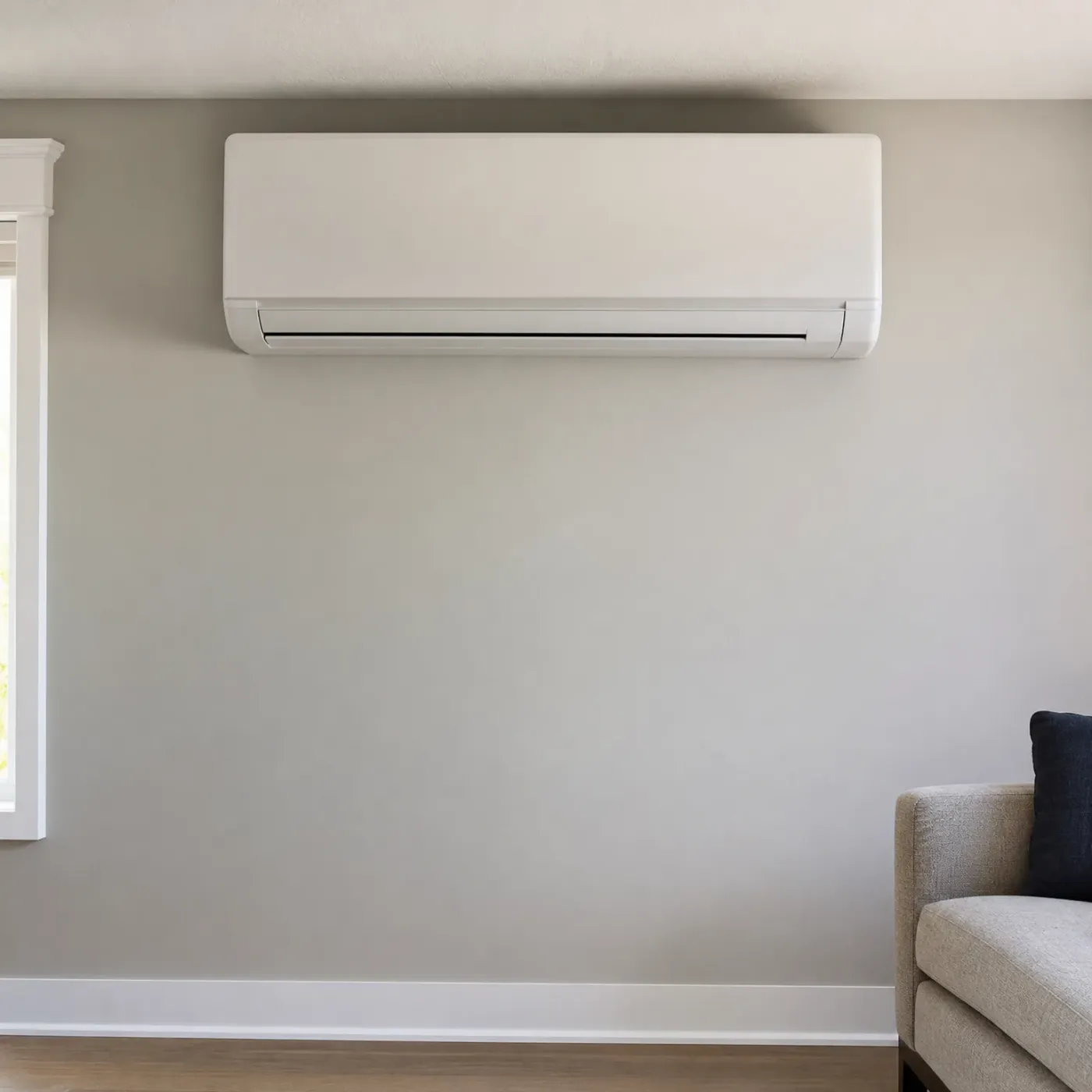
A white wall-mounted mini-split indoor unit installed high on a gray interior wall, with a window at left and part of a light gray sofa with a dark cushion at lower right.
After you get your mini split repair

Why does this leak keep coming back in Tulsa?

  • Cooling runs May through September

    Your mini split runs cooling May through September, and that whole stretch it's pulling moisture out of the air into the drain line.

  • Heat runs October through April

    Heat runs October through April, so the unit sits idle from the cooling side for seven months, long enough for a clogged line to go unnoticed.

  • Power here costs 13.96 cents per kilowatt-hour

    Power here runs 13.96 cents per kilowatt-hour, ordinary for the area, so a unit working harder because of a clog isn't driving your bill up much on its own.

NOAA nClimDiv 1991-2020 · EIA-861 2025

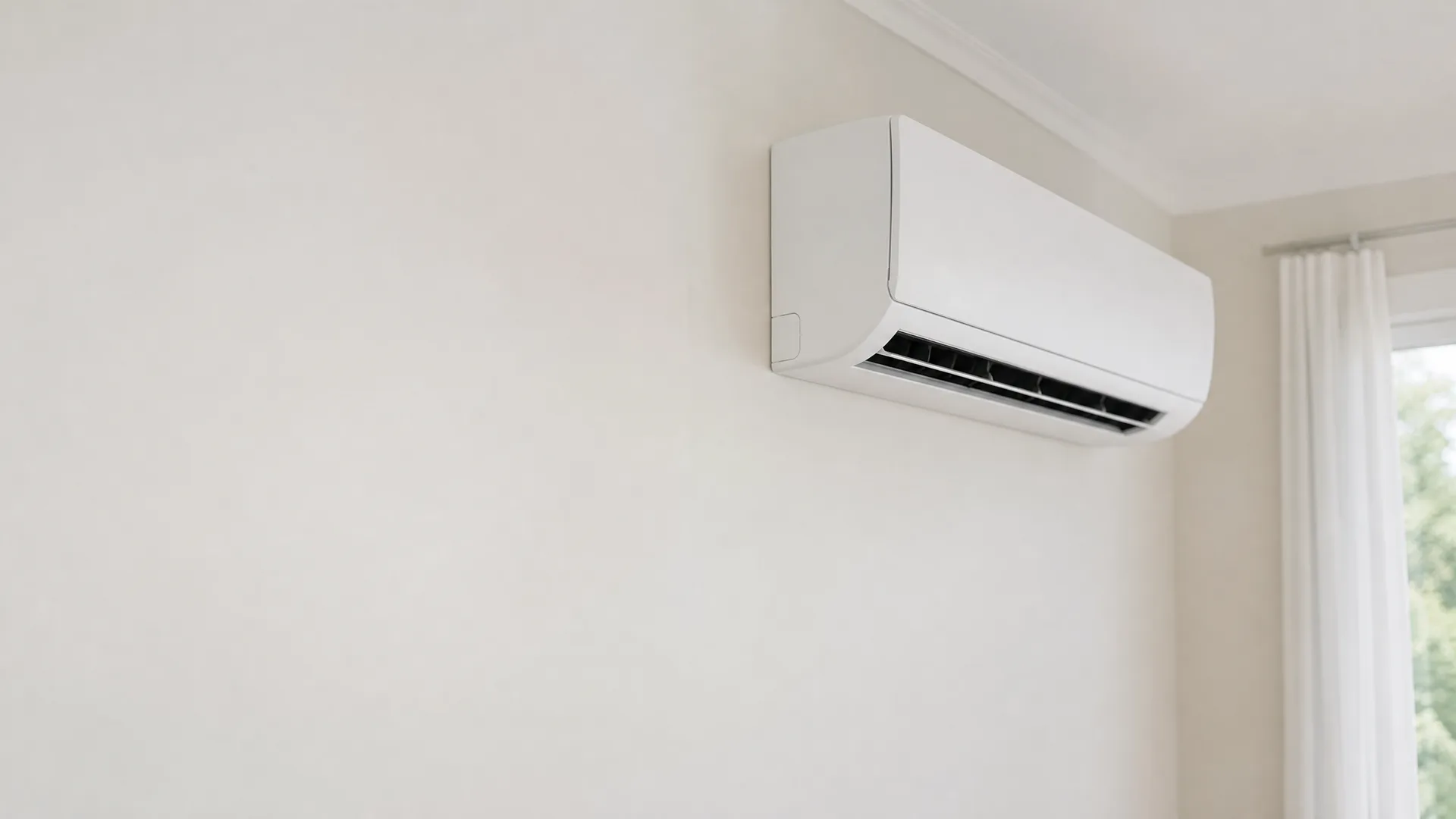
A white wall-mounted mini-split air conditioner indoor unit on a plain light-colored wall, with empty space to the right.

Why the drain line clogs

The condensate line carries water out through a small tube, often no wider than a pencil. Algae and mold build up inside that tube over a season of steady use, and dust from the filter adds to it. Once enough builds up, water backs up into the pan instead of draining outside. A line that ran clear in June can be fully blocked by August with nothing else about the unit having changed.

A white wall-mounted mini-split air conditioner on a plain light-colored interior wall, with a sheer white curtain and window with green foliage at the right edge.

What a frozen coil leaves behind

A dirty filter restricts airflow across the indoor coil, and the coil gets cold enough that moisture on it freezes instead of draining. The unit keeps running, so ice builds up over hours. When it shuts off or the ice gets too heavy, it melts all at once, faster than the drain line or pan was built to handle, and water shows up on the floor or wall below the unit.

Why does my mini split only leak when it's running, not when it's off?

That pattern isn't a coincidence. If water only shows up while the unit is running and stops once it shuts off, that points to something specific about how the system handles moisture during operation rather than a crack or a loose fitting that would leak regardless.

The coil only makes water while it's actively cooling

The indoor coil only pulls moisture out of the air while it's running and cold. The moment it shuts off, the coil warms back up and stops condensing water, so the leak stops too. This is exactly why a clogged drain line or a full pan shows up as a running-only leak. While the unit works, water keeps landing in the pan and has nowhere to go, so it overflows. Once the system cycles off, no new water is being produced, and whatever's already in the line or pan just sits there. If the leak kept going even with the unit off, that would point to something else, like a cracked pan or a line that was never sloped right.

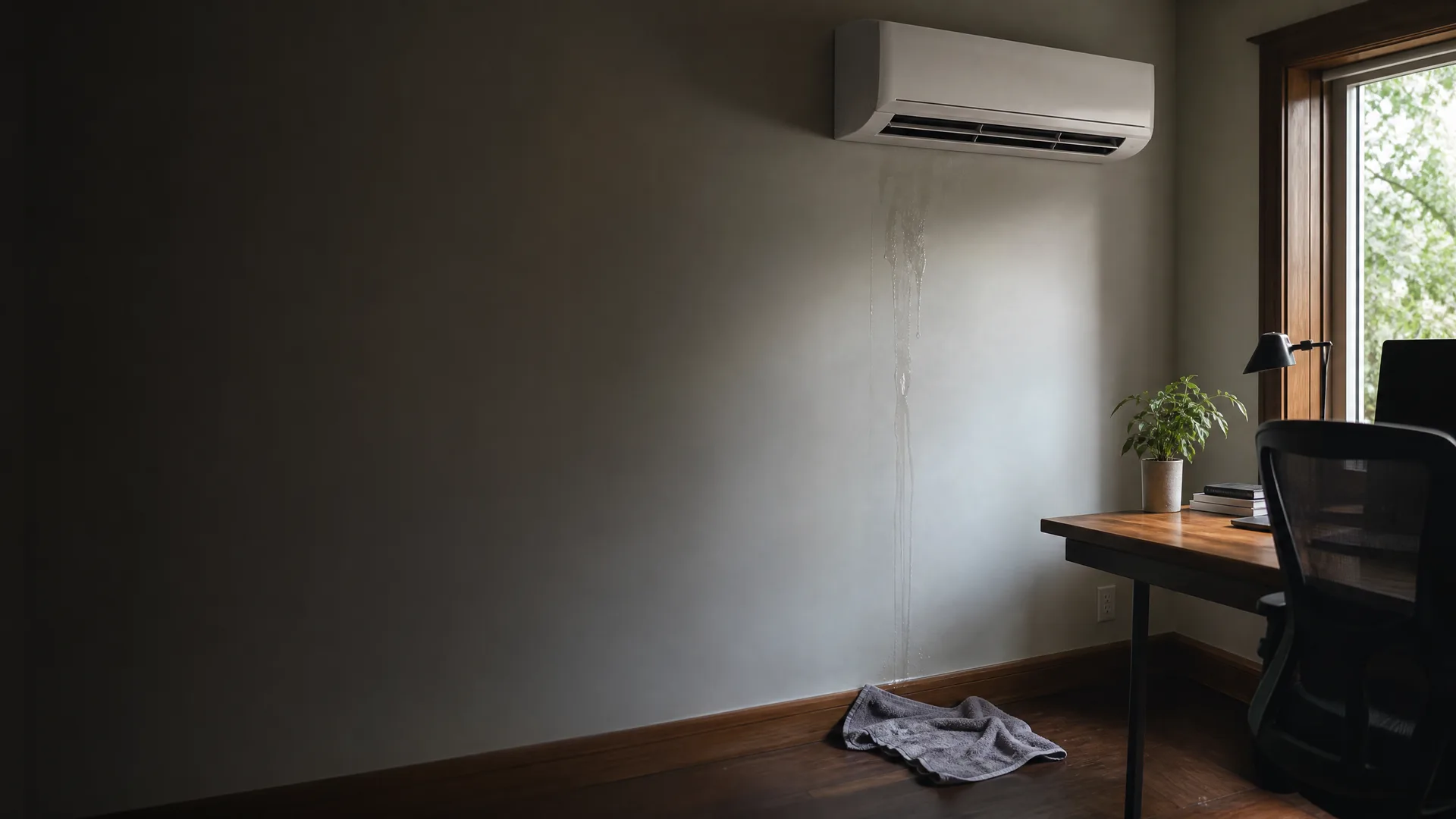
A wall-mounted mini-split air conditioner with a water streak running down the wall beneath it to a gray towel on the wood floor, beside a desk with a potted plant, lamp, and office chair near a window.

You've had the window unit in the home office closed up most of the afternoon, working with the mini split set low because the heat outside has been sitting in the high 90s. Around three o'clock you notice the carpet by the baseboard is dark. You get up and find a streak running down the wall under the indoor unit, following the line of the mounting bracket down to the trim. You grab a towel from the hall bathroom and press it against the wall, then step back and look at the unit like it might explain itself. It doesn't. The drip starts again a few minutes later, slower this time, tracing the same path down the drywall.

Done looking for a mini split pro

A leak that keeps coming back usually means the clog or the ice is further along than a one-time wipe-up can fix, and by the time water is reaching your floor or your baseboard, you're also looking at what it's doing to the wall behind it or the subfloor underneath. Finding someone who works on mini splits specifically, not just central systems, takes calls most people don't have time to make this week, especially with the unit still running and the puddle still showing up. Sending this form hands that search off. You stop calling around Tulsa asking who services ductless systems, stop explaining the same drip pattern three different times, and stop trying to guess which quote is from someone who actually knows these units. One contractor gets your situation, the wet carpet, the timing, the unit still running, and takes it from there.

Wipe it up and watch it

Some leaks stop after a cleaning you do yourself. If you catch it early, clearing dust out of the filter or vacuuming the end of the drain line where it exits outside can get water moving again. That buys time, and if the leak doesn't come back, the clog was minor. But if the line is clogged further up near the coil, or the pan underneath is cracked, wiping up water each afternoon does nothing to the actual blockage. You're just resetting the clock until it backs up again.

Have the line and coil checked

A contractor can run a line clear through the full length of the drain, not just the end you can reach, and pull the indoor unit's coil cover to see if ice or algae is sitting further back. That tells you whether the fix is a cleared tube or something more, like a cracked pan or a refrigerant charge that's too low to let the coil thaw properly. It also means someone looks at the wall or floor where water has already landed, instead of just the unit itself.

Cooling runs May through September

Five months of steady cooling means five months of condensate running through that drain line without a break. Any clog or algae buildup gets that whole stretch to grow before the weather finally turns and the unit stops working as hard.

NOAA nClimDiv 1991-2020

  1. Warm air crosses the indoor coil and the coil turns the moisture to liquid water

  2. Water drips off the coil into a shallow drain pan underneath it

  3. The pan feeds a small drain line that slopes down to carry water away

  4. A clog or ice in that line backs water up into the pan

What's that stain spreading under the indoor unit?

You'll usually notice it on the wall below the indoor unit first, a dark patch that spreads slowly or shows up again a few days after you wipe it away. Sometimes it's the baseboard underneath that stays damp, or a drip you can hear hitting the floor when the unit is running. If the unit is mounted over drywall, that water sitting against it can soften the drywall and stain it, and if it's running down into the floor, the wood or subfloor underneath can warp or start to smell musty. A mini split that keeps dripping in the same spot is worth dealing with before the wall or floor around it takes the damage instead of just the carpet.

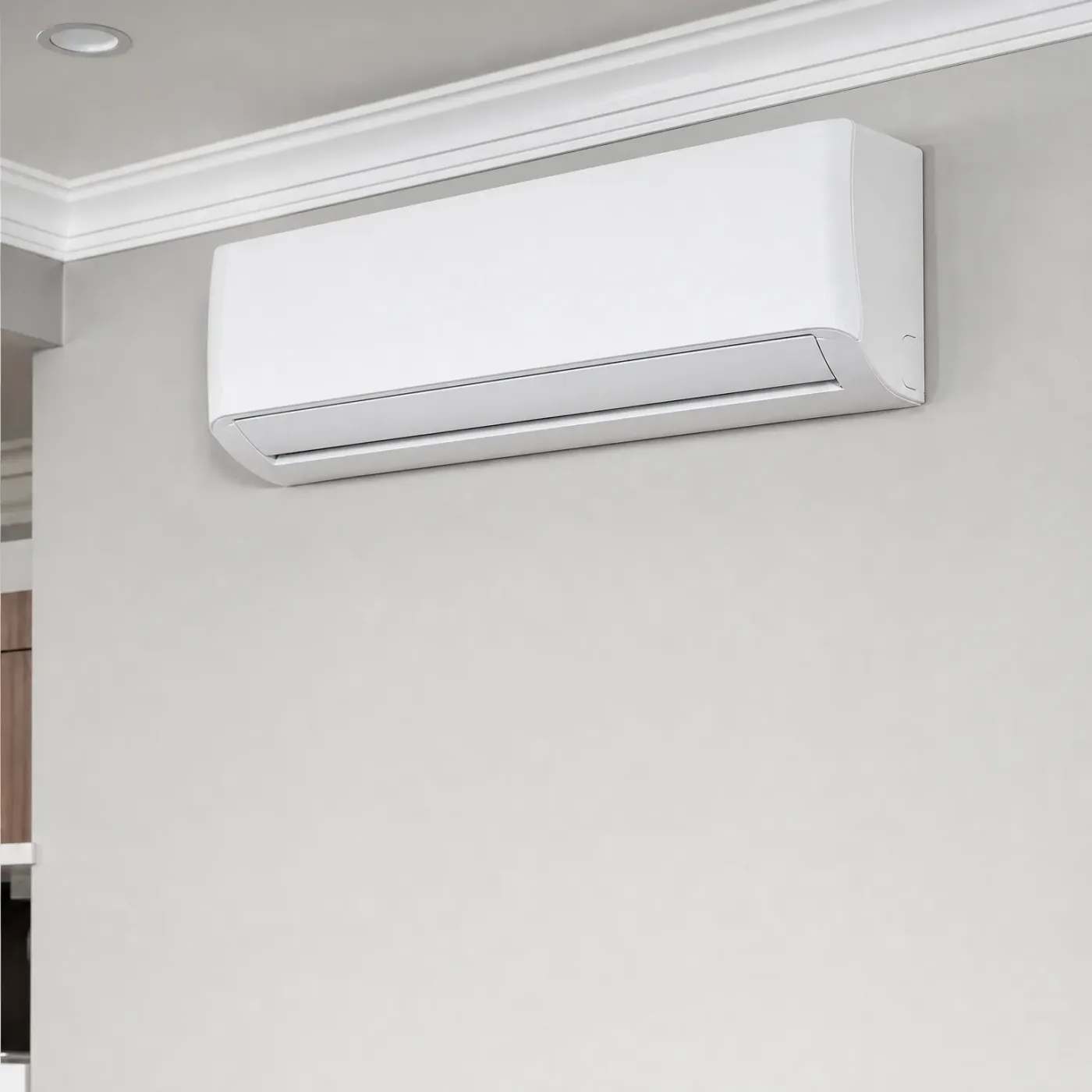
A white wall-mounted mini-split air conditioner installed high on a light gray interior wall below a white crown molding and ceiling with a recessed light.

Running clean

This is what a mini split looks like doing its job. The casing is clean, the vents are closed flush, and no water shows on the wall below it. Moisture is draining out through the line as fast as the coil pulls it from the air, same as it does all summer.

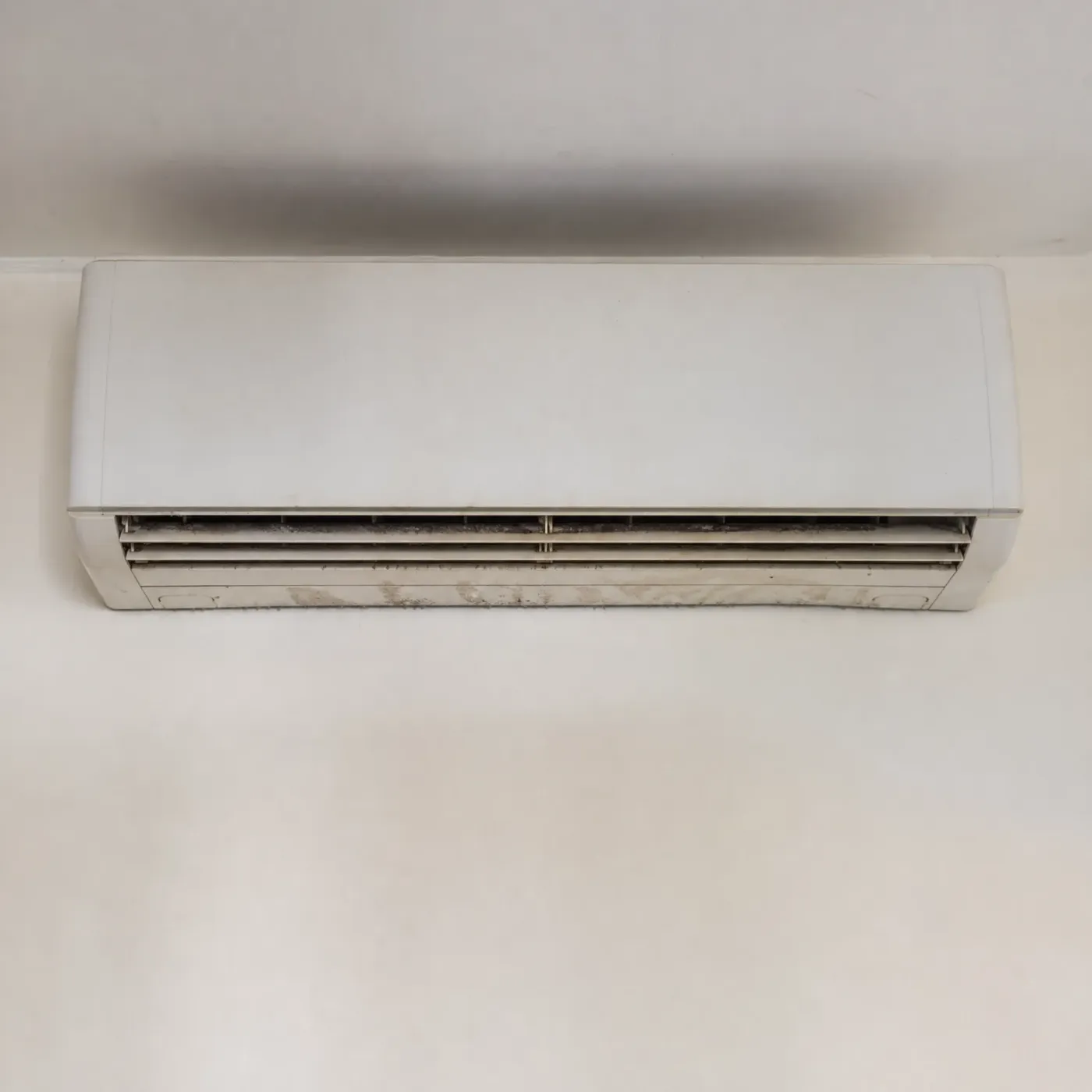
A dusty, discolored white wall-mounted mini-split air conditioner unit installed on a plain beige interior wall below a molding strip.

Showing its age

Dust has settled into the casing and the vents sit open, air moving but the unit clearly past a fresh install. A mini split in this shape has had years for dust to work into the filter and algae to build up in the drain line, which is exactly what backs water up into the pan.

A wooden table in the foreground holds a closed laptop and a ceramic mug of coffee, with a spindle-back wooden chair behind it, a beige wall with paneled wainscoting, a window at left, and a kitchen counter with a cutting board, bowl of fruit and greenery at right.

Water under the unit has one of a few causes

A clogged drain line, a dirty filter, or ice on the coil that's melting. That's what's behind nearly every leak like this in Tulsa. The drain pan, the small sloped line, the filter, all of it has to keep pace with a unit that runs hard from May through September, and when one part falls behind, the water shows up on your wall or your floor instead of outside where it belongs.

Finding out which one it is, and getting it fixed before it reaches the subfloor, is the part that takes a trade's eye. You could spend the afternoon calling around Tulsa, explaining the stain on your wall to three different shops, and waiting on quotes that don't tell you much until someone's looked at the unit in person. Send the form instead and that search becomes someone else's job, not yours.

A light-colored ceramic vase holding green leafy branches sits on a round wooden table, with a wooden-framed armchair draped in a cream throw, a tripod floor lamp, and sheer curtains blurred in the background.
A smiling man in a navy long-sleeve shirt sits at a wooden table in a kitchen and dining area, with a ceramic mug, a potted plant, and a sliding glass door behind him.
A smiling bearded man in a green henley shirt stands at a kitchen island with a gray mug, looking off to the side, with a dining area and shelves blurred behind him.
A smiling bearded man in a navy sweater sits at a white kitchen island with a ceramic mug, with open shelves, potted plants and a range hood behind him.
A smiling man in a dark olive long-sleeve shirt sits in a kitchen beside a counter with a dark mug, with a dining table, sideboard and hallway visible in the blurred background.

Mini Split Repair

It's off your list after this

Skip calling shops to ask who repairs mini splits in Tulsa County.

A black smartphone standing upright against a plain light gray background, its screen filled with solid green.
Step 1 of 3: Equipment