Should a mini split run all winter in Oklahoma

A local pro who services mini splits gets in touch about the tune-up.

Find a mini split pro

Should my mini split run all winter here in Oklahoma?

You've got a mini split and you're not sure if it's meant to carry you through an Oklahoma winter or just help out the gas furnace on milder days. With power cheap here and most homes running gas heat already, it's worth knowing which job the mini split is actually supposed to do before the cold settles in.

Yes, most mini splits handle Oklahoma winters fine

A mini split is a heat pump, and heat pumps are built to heat as well as cool. In Oklahoma, winter lows don't stay cold enough long enough to keep one from doing its job most days. The unit pulls heat from outside air and moves it in, and it can do that efficiently right down into the 30s and below. If your home already heats with gas, the mini split can run alongside it or carry smaller rooms on its own, and either way it's worth letting it run through the cold months rather than shutting it off after summer. Where it struggles is on the hardest freezes, when a backup heat source matters more than the mini split's output.

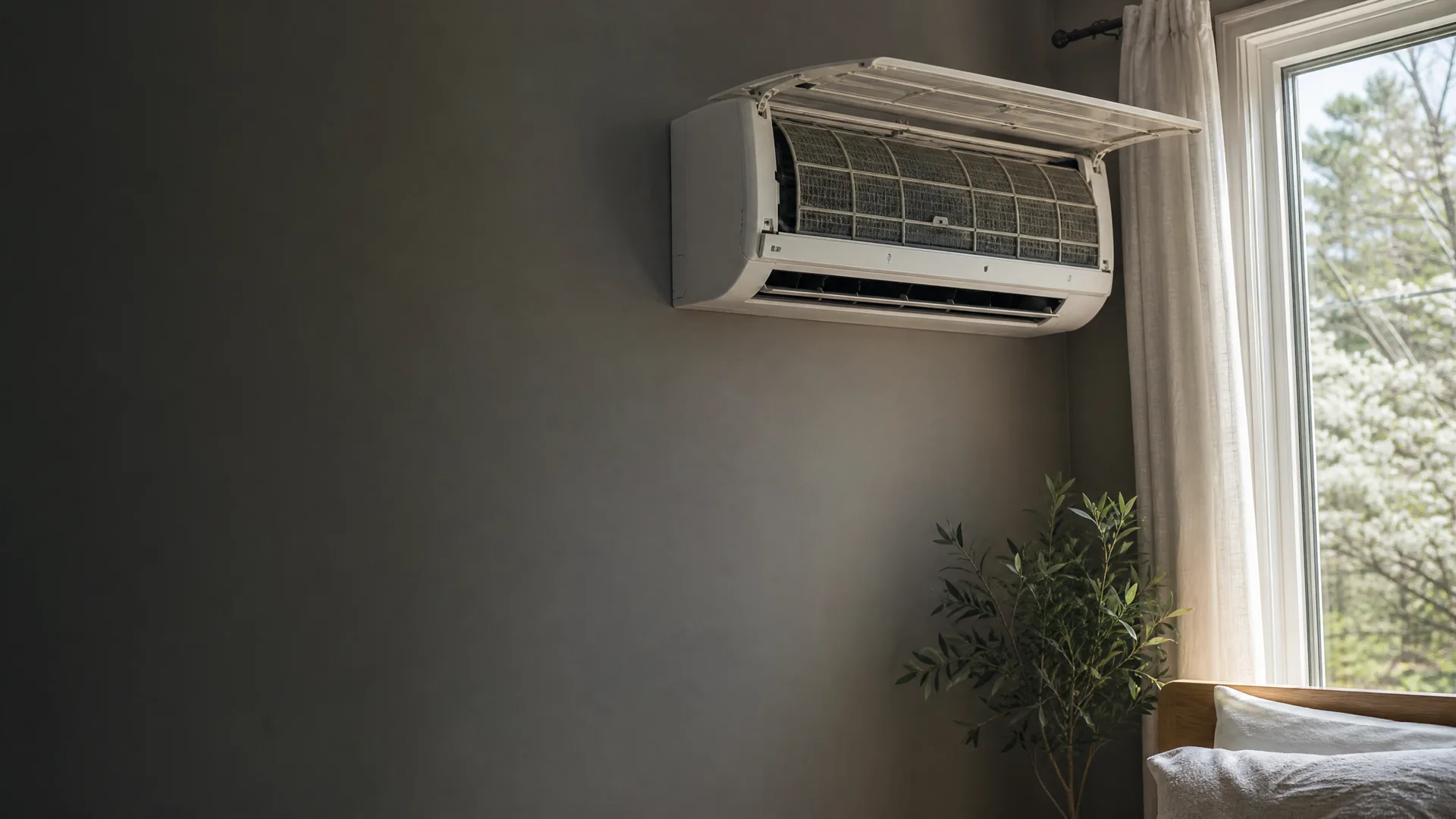
A wall-mounted mini-split air conditioner with its front cover open exposing the filters, on a gray interior wall beside a curtained window with green trees outside and a potted plant below.

Spring finally feels like spring, and you've got the windows cracked for the first time in months. You pop the front cover off the indoor unit in the bedroom to check on it before you start running the mini split for cooling again. The filter screen comes out coated in grey dust, thicker than you expected. It sat behind that cover all winter while the furnace carried the heat and the mini split barely ran. Dust still settles on it either way, pulled in anytime the blower turned over. You wipe a line through it with your finger and can see it needs a real rinse before summer asks anything of it.


Can you tell if the mini split is struggling to keep up?

Walk up to the indoor unit on a cold morning and hold your hand under it. If the air coming out feels lukewarm instead of warm, or the outdoor unit is coated in frost that doesn't melt off between cycles, it's working harder than it should to keep the room at temperature. You might notice the room by the mini split staying a few degrees cooler than the rest of the house, or the unit running long stretches without the fan ever slowing down. None of that means it's broken, but it does mean it's losing ground on the coldest nights. Left alone, that strain adds up on the parts that keep it running, and on what you're paying to heat that one room.

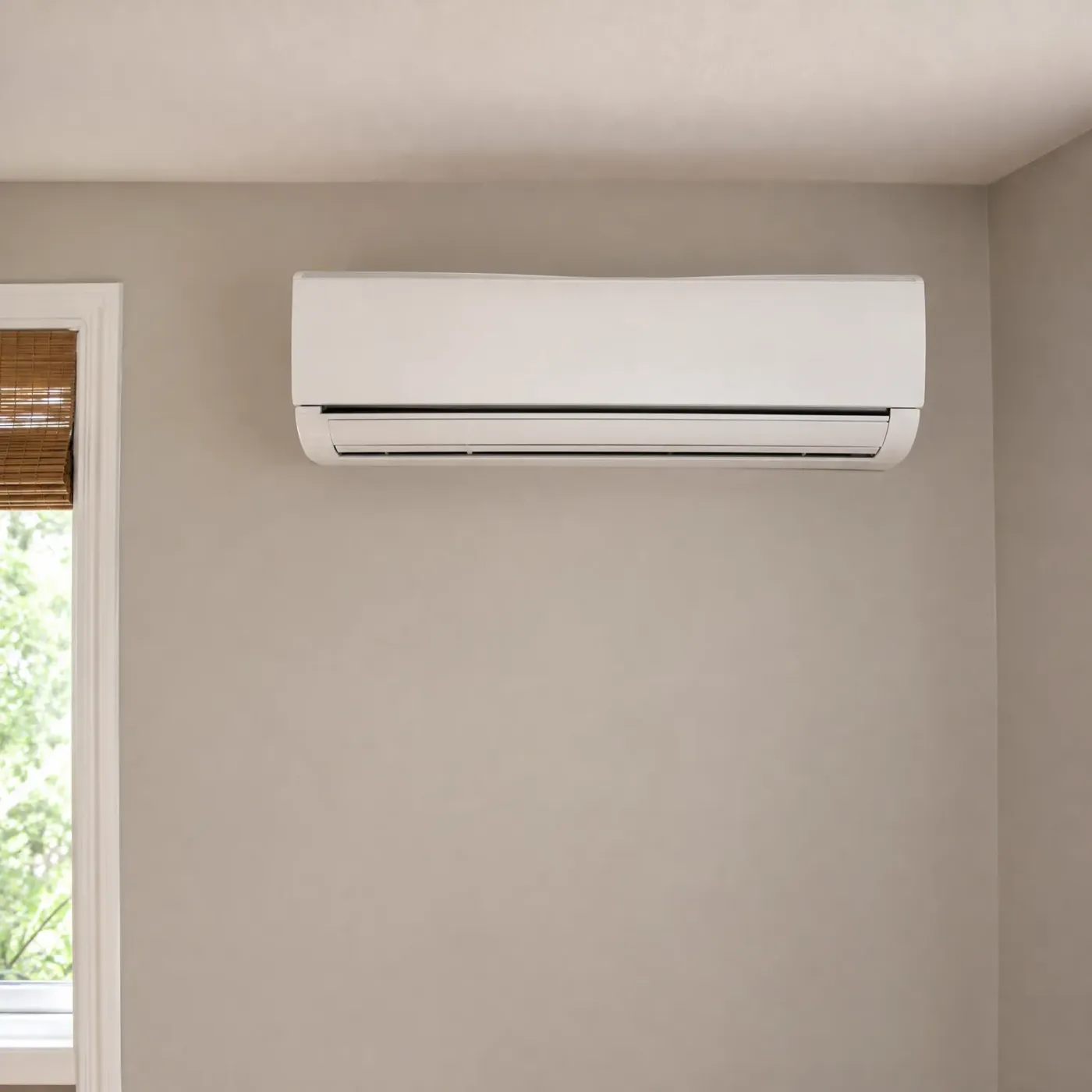
A white wall-mounted mini-split air conditioner installed near the ceiling on a beige interior wall, with a window and bamboo blind at the left edge showing green foliage outside.

Running clean

This is a mini split doing its job. Air moves out warm, the panel and louvers are clear, and the unit isn't working any harder than it has to. A clean coil transfers heat the way it's supposed to, whether it's backing up the furnace or carrying the load on its own.

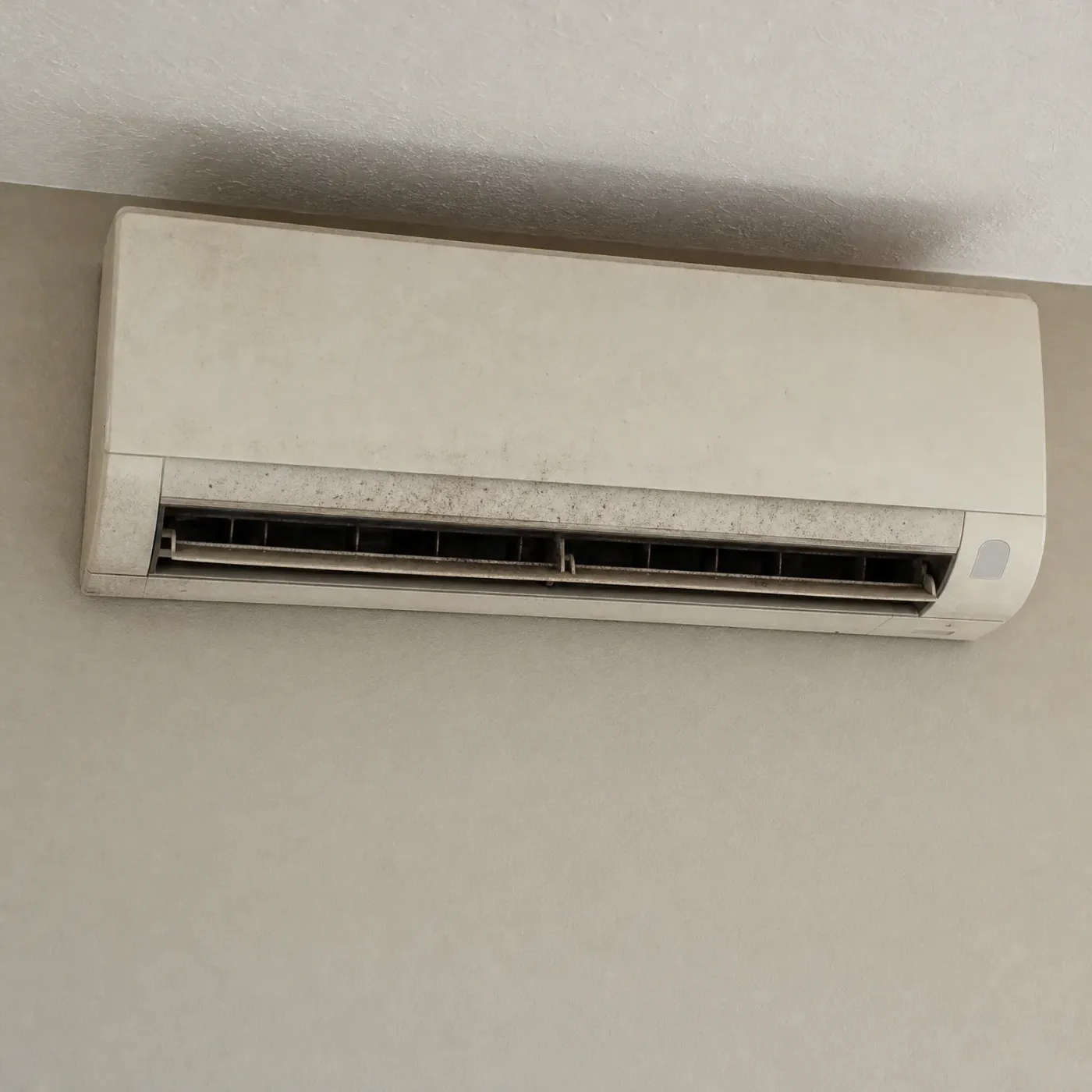
A wall-mounted mini-split air conditioner indoor unit with discolored casing and dusty vents, installed near the ceiling on a plain light-colored wall.

Running dirty

Dust and grime like this on the front panel and louvers usually mean the coil behind them is just as dirty. A mini split in this shape has to work harder to put out the same heat, and it's the kind of thing that gets missed once gas heat takes over most of the job.

A man in a dark blue shirt stands in an open front doorway of a stucco and wood-clad house, facing a blond woman seen from behind in the foreground on a stone walkway.

How a mini split actually makes heat

A mini split doesn't burn anything to heat your house. The outdoor unit pulls heat out of the outside air, even when it's cold out, and the refrigerant carries that heat inside to the indoor unit, which blows it into the room. That's the reverse of what it does in July. Below a certain outdoor temperature, the unit has to work harder to pull the same amount of heat out of the air, and the outdoor coil can frost over. It runs a defrost cycle to clear that frost, which is why the outdoor fan sometimes stops and starts on a cold morning. None of that means something's wrong.

What it does mean is that a mini split carrying part of your heating load all winter needs its coils, filters and refrigerant charge checked with the season in mind, not just before summer. If you're not sure whether yours was ever set up to run through an Oklahoma winter, or whether it needs a different look than the gas furnace gets, a contractor who services both can tell you what your specific setup actually needs.

Interior corner with a beige sofa holding a dark green and a light cushion and a textured throw, a potted small-leaved tree beside a white-framed window, and a dark shallow bowl on a wooden coffee table in the foreground.
A woman in a cream sweater with her hair in a bun laughs while seated at a stone counter holding a glass of red wine, in a dimly lit interior with a sofa, houseplants and a large window at night.
A woman with long dark hair in a cream knit sweater laughs while looking off to the side, seated in front of a dimly lit kitchen with an island, stools, open shelving and a potted plant, with a glass of red wine in the foreground.
A smiling woman with long dark wavy hair in a light knit sweater sits at a marble counter with a glass of red wine, with a dimly lit living room and kitchen in the background.
A smiling woman with long wavy brown hair in a beige sweater sits at a white marble counter with a glass of red wine, with a living room, dining table and kitchen cabinets behind her.

Get your mini split to the right pro

A mini split that's gone months without a filter cleaning or a coil check is working harder than it needs to, whether it's running steady through winter or just picking up the shoulder months. You can see frost on the outdoor unit or lukewarm air from the vent, but you can't see a refrigerant charge that's a little low or a coil that's losing its grip on heat transfer. That's the kind of thing a maintenance visit catches before it turns into a unit that can't keep the bedroom warm on a cold morning. Finding someone who actually works on mini splits in your area, calling around, explaining what the unit's doing, waiting on quotes, that's the part that eats your afternoon. You already know what you're dealing with: a mini split carrying real weight against an Oklahoma winter, running longer hours than most people expect. Whether it's backing up the furnace or doing the job alone, it holds up better when someone who knows the equipment has actually looked at it.

The Defrost Cycle Explained

  • The outdoor unit's defrost cycle runs automatically when frost builds on the coil, reversing briefly to melt it off.
  • During defrost the indoor fan may pause or blow cool air for a few minutes, which is normal and not a sign of trouble.
  • Refrigerant pressure and flow are controlled by a variable speed compressor, which ramps up or down instead of switching fully on and off.
  • Below a certain outdoor temperature, output drops and that's when most Oklahoma homes lean harder on the gas furnace.
  • The reversing valve is the part that switches the system between pulling heat in and pushing it back out, and it's a common failure point in units that run most of the year.
  • Oil returns to the compressor through the refrigerant line, so short cycling in mild weather can actually help lubrication more than long steady runs.

The outdoor unit is doing more in winter than it looks like from the driveway. Cold, damp air means frost builds on that outdoor coil, and when it does, the system briefly reverses itself to run hot refrigerant through the coil and melt it off. You might notice steam coming off the unit during this, or the indoor fan pausing or blowing air that isn't quite warm for a few minutes. That's the defrost cycle working, not a sign the unit is failing. Behind this, a variable speed compressor is adjusting refrigerant flow up or down to match how much heat the house needs right then, rather than slamming on and off the way a window unit might. The part making the reversal happen, switching the system between pulling heat in from outside and pushing it back out in summer, is called the reversing valve. It's mechanical, it moves every time the system switches modes, and on units that run most of the year it's one of the first things to wear out. There's an upside to an Oklahoma mini split not running flat out all winter: oil needs to make its way back to the compressor through the refrigerant line, and a system that cycles on and off with the weather, rather than running long and steady, actually helps that oil return more often. Short runs aren't a weakness here. They're part of how the system is supposed to work in a climate like this one.

Power costs 13.21 cents per kilowatt-hour statewide

At 13.21 cents a kilowatt-hour, running the mini split through more of the winter costs less here than it would most places. If you lean on it for the milder days instead of firing up the furnace every time, you're not punishing the power bill to do it.

EIA-861 2025 statewide residential average

A mini split can run all winter in Oklahoma, or just handle the mild stretches while the furnace covers the cold snaps. Either way is fine as long as the unit is clean. The coil, the filter, and the outdoor unit are what decide whether it's pulling its weight or just running up the bill while blowing lukewarm air. Frost that won't melt off, air that isn't warm at the vent, these tell you which one you've got. A mini split that's maintained can carry more of the season than most people expect at Oklahoma's power rates. One that isn't will cost you either way, whether it's your main heat or just backup for the furnace. The answer isn't really about winter. It's about whether the unit in front of you is in shape to do the job you're asking of it, steady through January or just picking up the slack in October and April.

A smiling bearded man in a navy crewneck sweater sits at a dinner table with a glass of red wine, plates and glasses in the foreground, in a dimly lit room with a lamp and framed picture behind him.
A woman in a dark gray sweater reclines on a light sofa with eyes closed and a slight smile, under a textured gray blanket with an open book resting on her lap, with a lit table lamp and plant in the background.

Mini Split Maintenance

The right pro for this job

Skip calling around to set up a mini split tune-up.

A black-framed smartphone standing upright against a plain white background, its screen filled with solid green.
Step 1 of 3: Equipment