Running fine
Warm air moves steadily out of the indoor unit and the room holds its temperature. No frost on the lines, no puddle under the unit, no short-cycling. That's a mini split keeping up with an Oklahoma cold snap the way it's supposed to.
That ice on the outdoor unit means it's pulling heat out of air that's already cold, and in an Oklahoma winter, a morning in the 20s or 30s is enough to do it. Every heat pump forms some frost in that range. It runs a defrost cycle to melt it off, reversing itself for a few minutes before going back to heating. If the ice keeps building past that, something is stopping defrost from finishing, or the unit is losing refrigerant, or the outdoor coil is dirty enough that it can't shed heat properly. A mini split that's low on charge or has a failing defrost control will ice over again and again, and each cycle it loses puts more strain on the compressor. You can knock the ice off by hand, but it comes back until whatever is blocking defrost gets fixed. Left alone through a cold snap, it ends up heating poorly or not at all, right when you need it running.
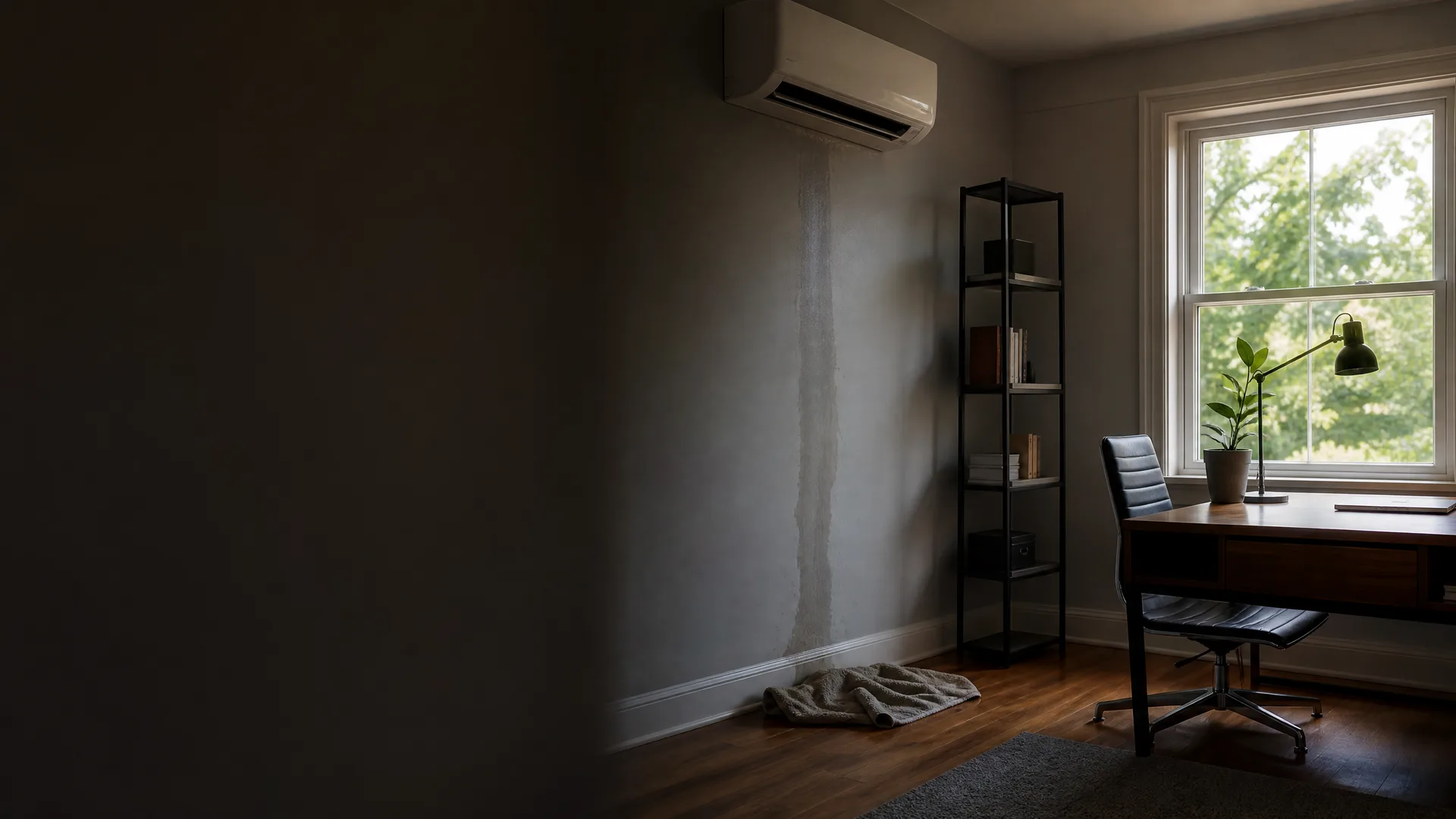
Wait, this is a mismatch. This image and timing describe a summer afternoon with a wet streak under an indoor unit, not winter ice on an outdoor unit.
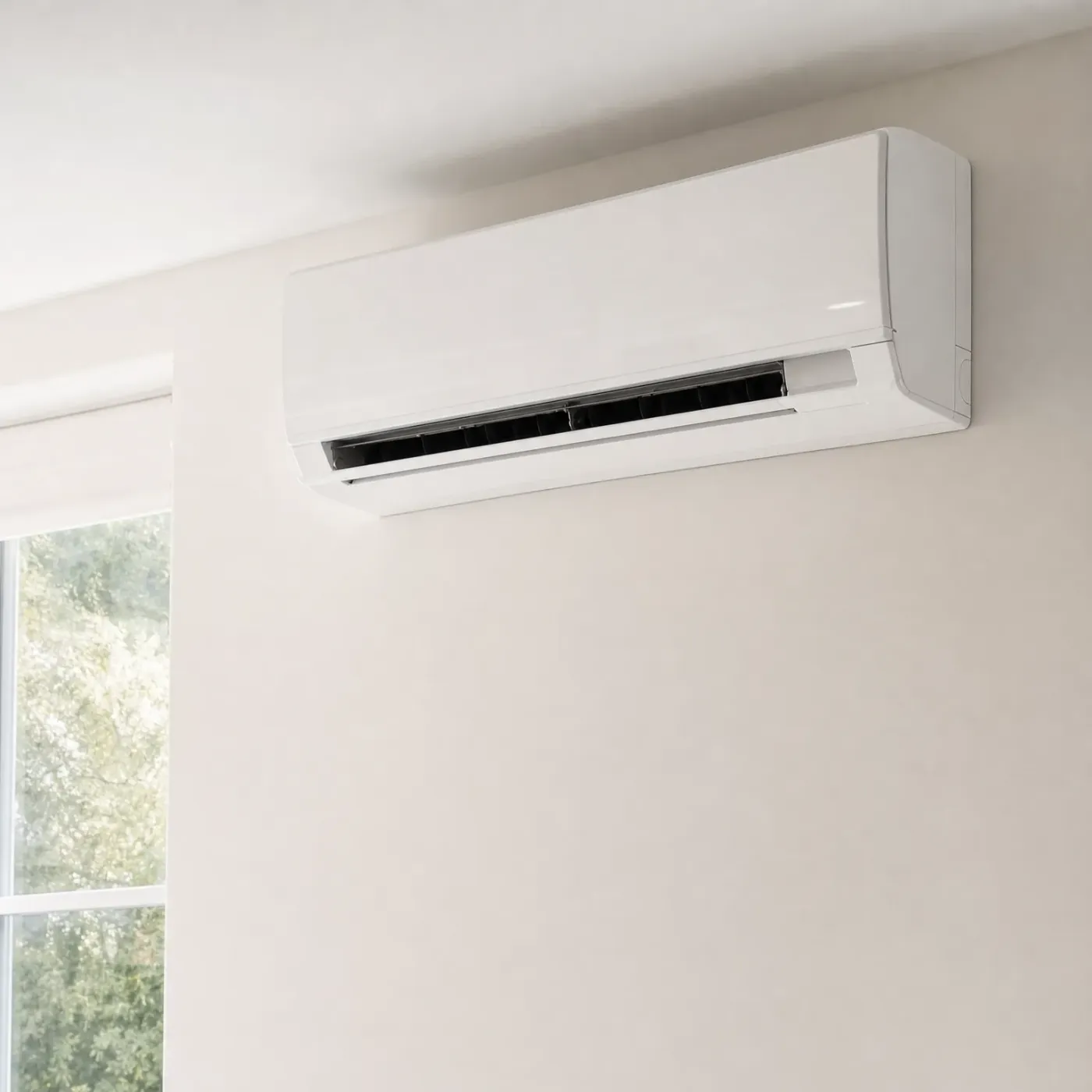
Warm air moves steadily out of the indoor unit and the room holds its temperature. No frost on the lines, no puddle under the unit, no short-cycling. That's a mini split keeping up with an Oklahoma cold snap the way it's supposed to.
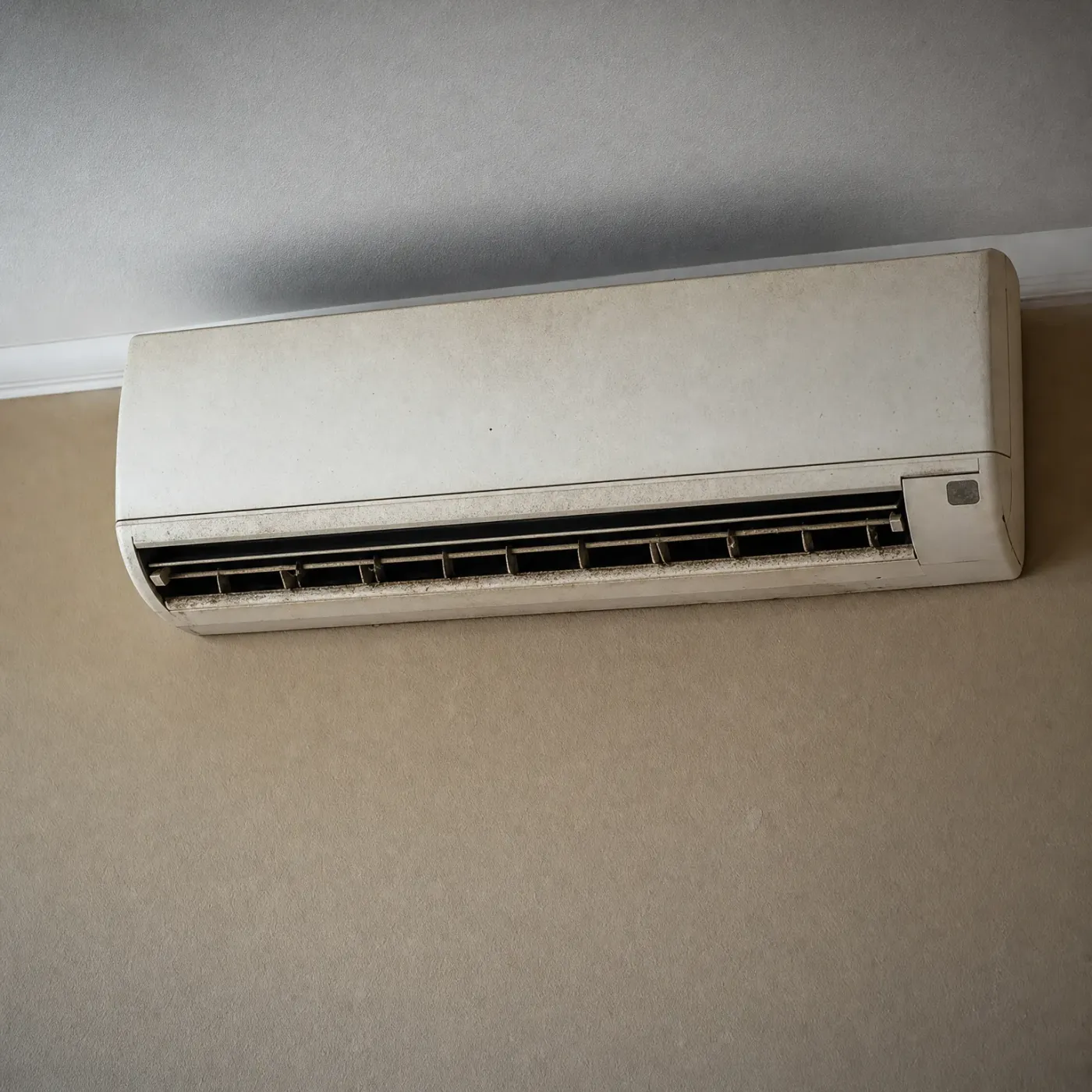
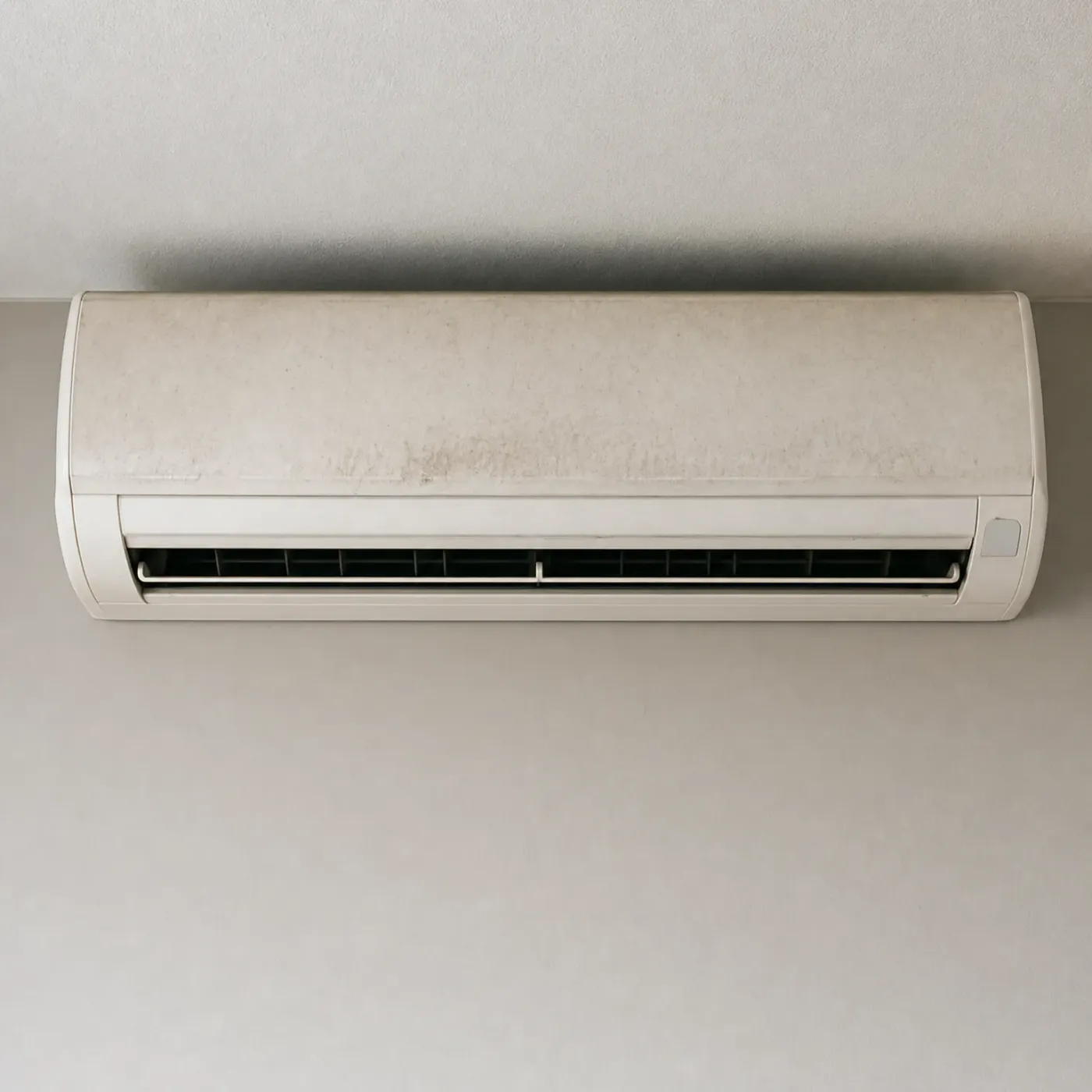
Thick ice builds on the outdoor coil and doesn't clear on its own. The indoor unit runs but barely warms the room, or the dust and grime on the vents choke the airflow it needs to defrost properly.




One form replaces the calls you'd make to find a mini split pro.
No charge to send it. You decide if you hire them.
A mini split's outdoor unit has a coil that gets colder than the air around it when it's pulling heat out of that air to send inside. Below a certain outdoor temperature, moisture in the air lands on that cold coil as frost instead of water. Left alone, that frost would build up layer on layer and block airflow through the coil entirely. So the system is built to notice it's happening and interrupt itself on purpose, running a short reverse cycle that sends warm refrigerant back through the outdoor coil to melt what's built up. That's the whoosh and the steam you might catch for a few minutes on a cold morning.
Defrost mode only works if the system can still sense the coil temperature correctly and still has enough refrigerant to run that reverse cycle with any strength. A failing sensor can leave the unit running defrost too rarely, or not at all, while frost keeps building underneath it. A refrigerant leak weakens the reverse cycle so it melts less ice than it should each time around, and the coil loses ground a little more on every pass. Either way, what started as normal frost on a cold Oklahoma morning turns into a block of ice that doesn't fully clear between cycles, and that's a job for a contractor, not a thermostat setting.
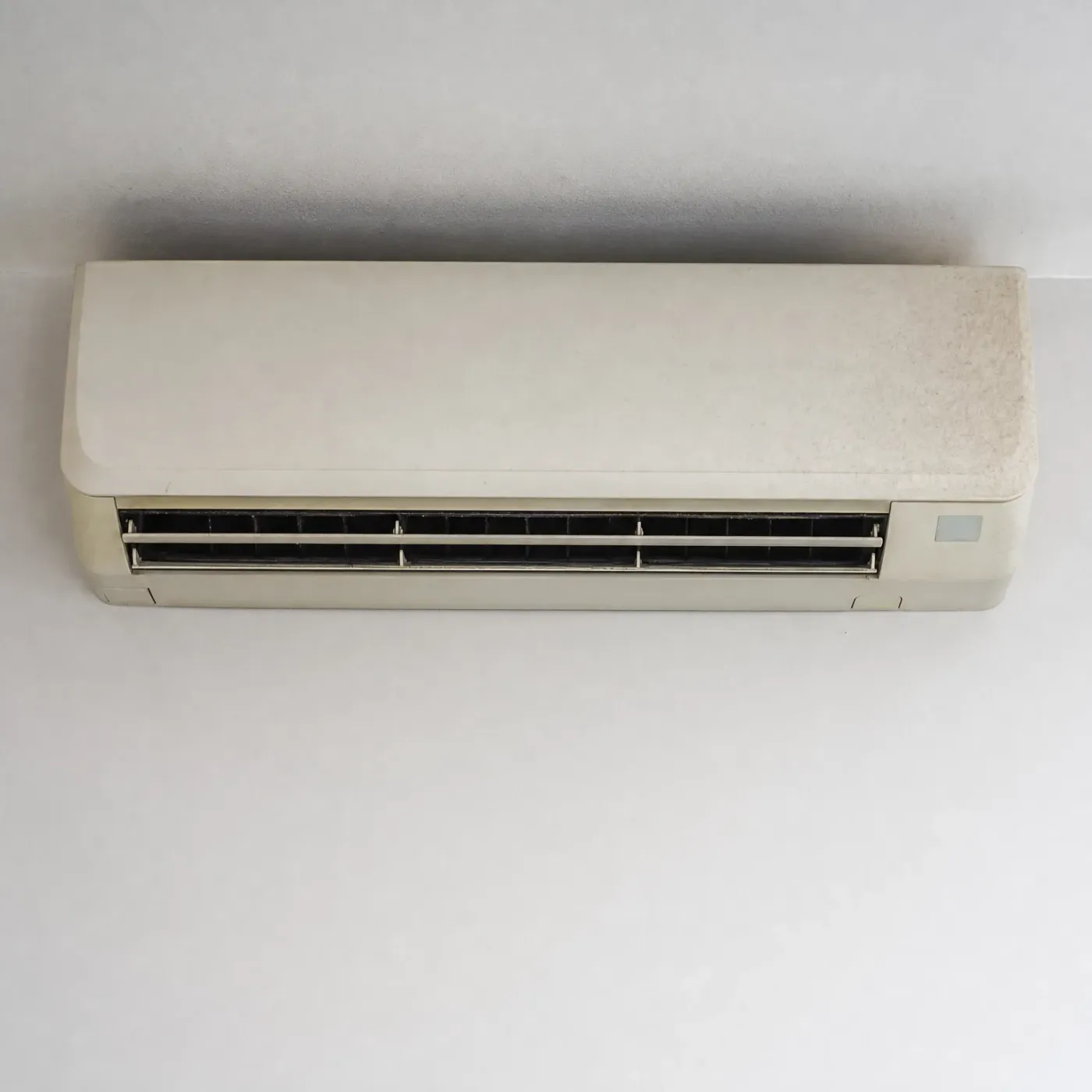
Inside the outdoor unit, a reversing valve is what makes defrost possible. It switches the refrigerant flow so hot gas moves out to the outdoor coil instead of into the house, which is why the indoor fan pauses or slows during a cycle. The system is briefly running backward on purpose. A sensor mounted on the outdoor coil watches its temperature and reports to the control board, which decides when enough frost has built up to start the cycle. Most boards work on a timer underneath that, checking conditions every 30 to 90 minutes instead of reacting the moment frost forms. That is why some frost sitting on the coil for a while is normal and not a sign of trouble. Problems start when a part in that chain is off. A sensor giving a bad reading or a reversing valve that sticks can mean defrost never kicks in, and ice keeps building past what the cycle would normally clear. A coil that is already dirty makes it worse, since weaker airflow across it means defrost has more ice to melt each time it runs.
At 13.21 cents a kilowatt-hour, your mini split stays one of the cheaper ways to hold a room steady through an Oklahoma cold snap. A unit stuck defrosting instead of heating runs longer for the same warmth, and that shows up on the bill even at this rate.
EIA-861 2025 statewide residential average

A thin coat of frost that melts away within ten minutes of the outdoor fan stopping is just defrost mode doing its job. Ice that stays, builds up thick, or keeps coming back within an hour means something in that cycle isn't finishing, and that's a repair, not something that clears on its own with warmer weather.
If that's what you're looking at, you don't have to start calling shops around Oklahoma and walking each one through the same description of your unit. Answer a few questions about what you're seeing and you'll be matched with a contractor who works on mini splits like yours, and they'll reach out to you directly. No comparing quotes cold, no repeating yourself to the next place on the list.

Describe what your mini split is doing once, in one form.
There's no charge for the request.