Running clean
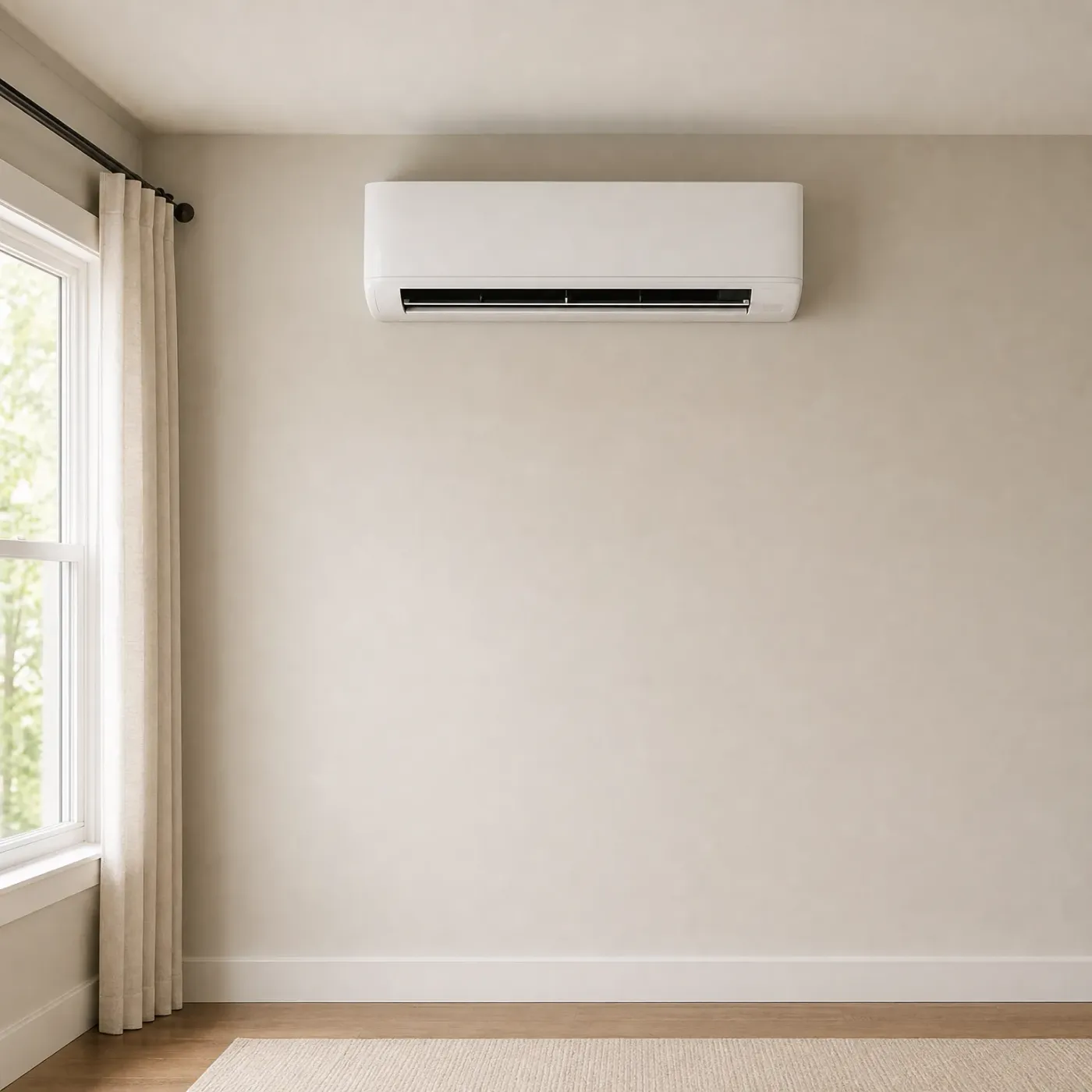
This is what a mini split should look like. No dust on the housing, no staining on the wall behind it. Switch it to heat and the air passing over that coil has nothing sitting on it to burn off.
 Connect with a pro
Tell a local repair pro what your mini split is doing.
A mini split that smells bad when it kicks on for heat usually means something sitting inside the unit that shouldn't be there. Dust on the coil, mildew in the drain pan, even a dead bug caught in the blower can all burn off a smell the moment warm air starts moving. Some smells point to something more serious, like a refrigerant leak or an electrical problem in the board.
Oklahoma winters put a mini split through real work, and most homes here lean on gas for heat, so the mini split might only run hard for stretches at a time. A system that sits idle for weeks between uses collects dust and moisture in the off time, and that shows up as smell the next time the heat strip or compressor fires up.
Figuring out which of these it is from your living room is hard. A musty smell and a burning smell point to different problems, and guessing wrong means paying for a fix that isn't the fix you needed.
This page can match you with a contractor near you who handles mini split repair and knows what that specific smell is telling you. That means skipping the part where you search contractor after contractor, call several, explain the same smell and the same symptoms each time, then sit with a stack of quotes trying to tell which one actually knows the problem. Instead you answer a few questions once, and a contractor who takes on jobs like yours gets in touch with you directly.
What happens once that contractor is in your home, what they find and what it takes to fix, is between you and them. What this page gets you is past the searching and into a conversation with someone who can actually look at your unit.
A musty or burning smell when your mini split switches to heat usually comes from whatever has settled inside it since it last ran warm air. Oklahoma summers are humid, and a mini split spends most of that stretch in cooling mode, pulling moisture out of the air across its indoor coil. Some of that moisture lingers in the drain pan and on the coil itself, and mold or mildew can take hold there over months of barely being touched. When heat kicks on in the fall or winter, that buildup gets warmed for the first time in a while and the smell comes through the vents. A sharper, dusty smell is usually just dust burning off the heating element, and it should fade within an hour or so. If the smell doesn't fade, or it comes back every time the unit heats, something is still sitting in there that needs to be cleaned out or looked at directly.

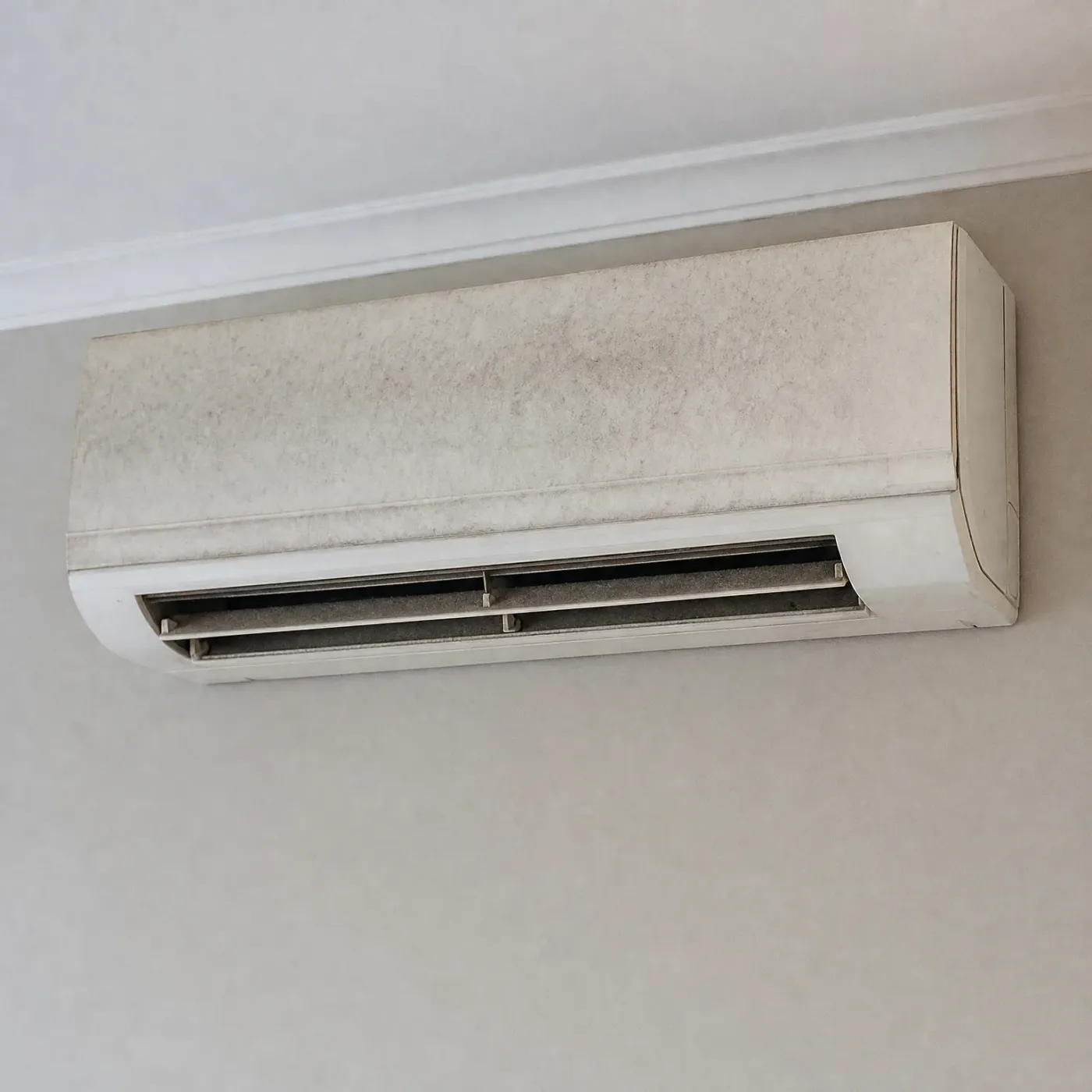
Warm air from a mini split has to pass over the indoor coil first. Whatever has settled there since the unit last ran heat goes into the room before anything else does. Behind that coil sits the blower wheel, and dust on its fins gets flung loose every time it spins up to push air through the room. Below both of them is the drain pan, which spent the summer catching condensation. Water sitting in that pan breeds mold, and the unit blows right past it on the way out. Sometimes the smell has nothing to do with moisture at all. A bug that got into the housing, or a scrap of nesting material, can sit there smelling faintly musty while the unit is idle, then turn sharp once the coil or heat strip gets hot. Heat mode runs the unit differently than cooling does, warming parts that stayed cool all summer, which is why a smell can show up now that was never there before. A dirty filter makes all of this worse, forcing air around its edges instead of through it and carrying more of whatever's built up on the coil and blower straight at you.




You've probably noticed the smell comes back every year around the same time, right when the unit switches over to heat after months of running cool. Most homes in Oklahoma heat with gas, so a mini split handling that job gets asked to do something it rarely does, and whatever built up on the coil over the summer finally gets a reason to show up in the air. Figuring out whether it's a dirty coil, a clogged drain pan, or something else means someone has to open the unit and look. That's not a weekend project most people want to take on, and finding a contractor who'll actually show up for a smell complaint instead of a dead unit takes its own round of calls. You'd be explaining the same thing to three or four different companies, waiting on quotes, trying to tell who's worth having in your house. Handing that off means one contractor who works on mini splits gets your situation and reaches out, and you're back to warm air that doesn't carry last July with it.

You're at the desk going through the mail when the smell hits, that same musty closed-up smell from last October. It's a hot afternoon outside, but the mini split just clicked over to heat for the first time in months, and the air coming off it smells wrong. You look up and there's a streak running down the wall under the indoor unit, dark against the paint, dripping slow enough that you've already grabbed a towel and laid it on the floor. The unit keeps running warm air into the room anyway, smell and all, while the water keeps finding its way down the same path.
You turned the heat on and the smell was bad right away, but ten minutes later it's worse, not better. You keep waiting for it to burn off like it usually does, but this time it just builds the longer the unit runs. That's different enough from a normal startup smell that it's worth knowing why.
A quick burst of smell when the heat kicks on is usually just what settled on the coil since last spring, and it clears once that's burned off. A smell that keeps growing means the blower is pulling air across something it can't burn off, like mildew in the drain pan or mold on the coil fins itself. Every minute the unit runs, more air moves through that same spot and carries more of the smell into the room. In a mini split that sat in cooling mode all summer pulling moisture out of an Oklahoma house, that kind of buildup has had months to take hold before heat ever asks the coil to do anything different.


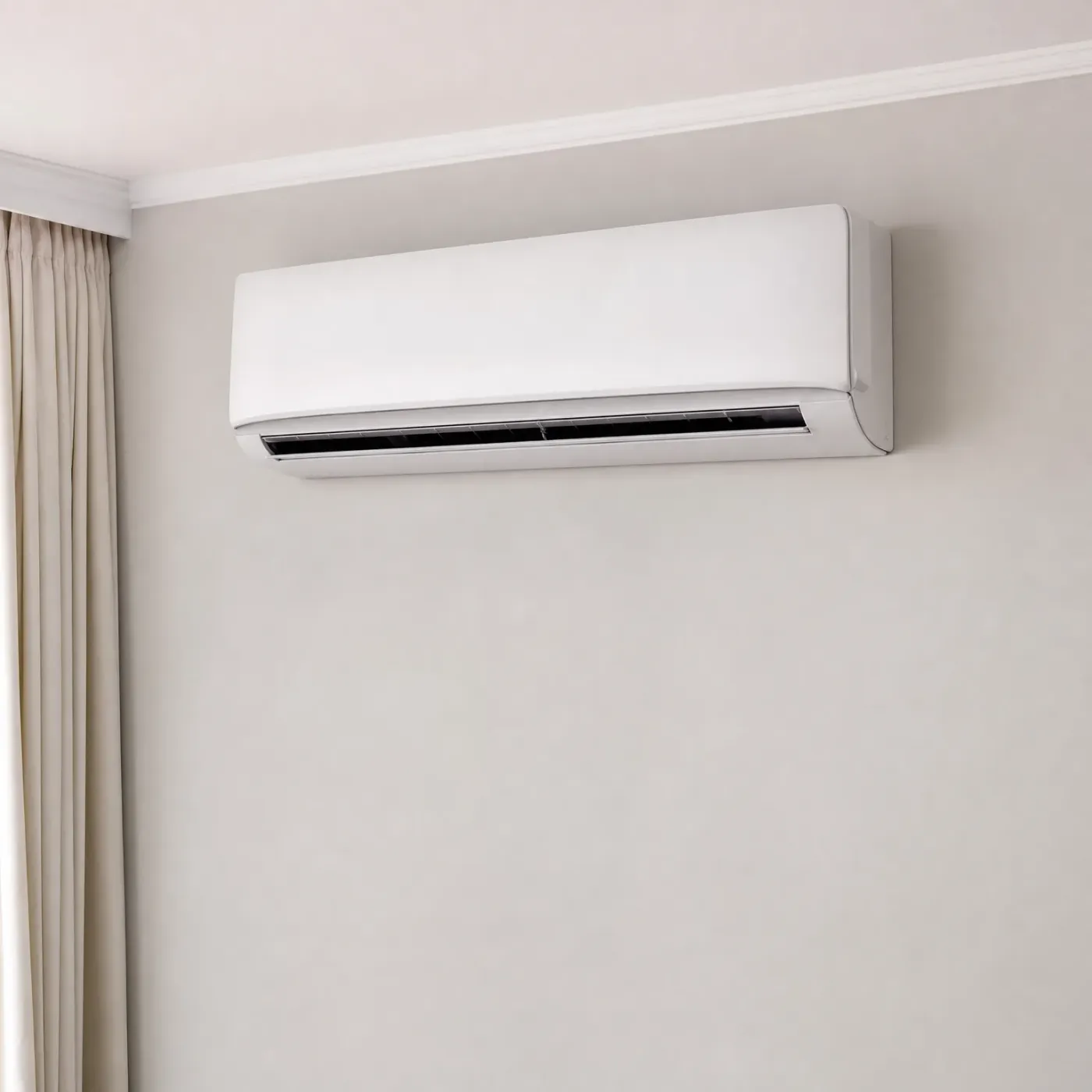
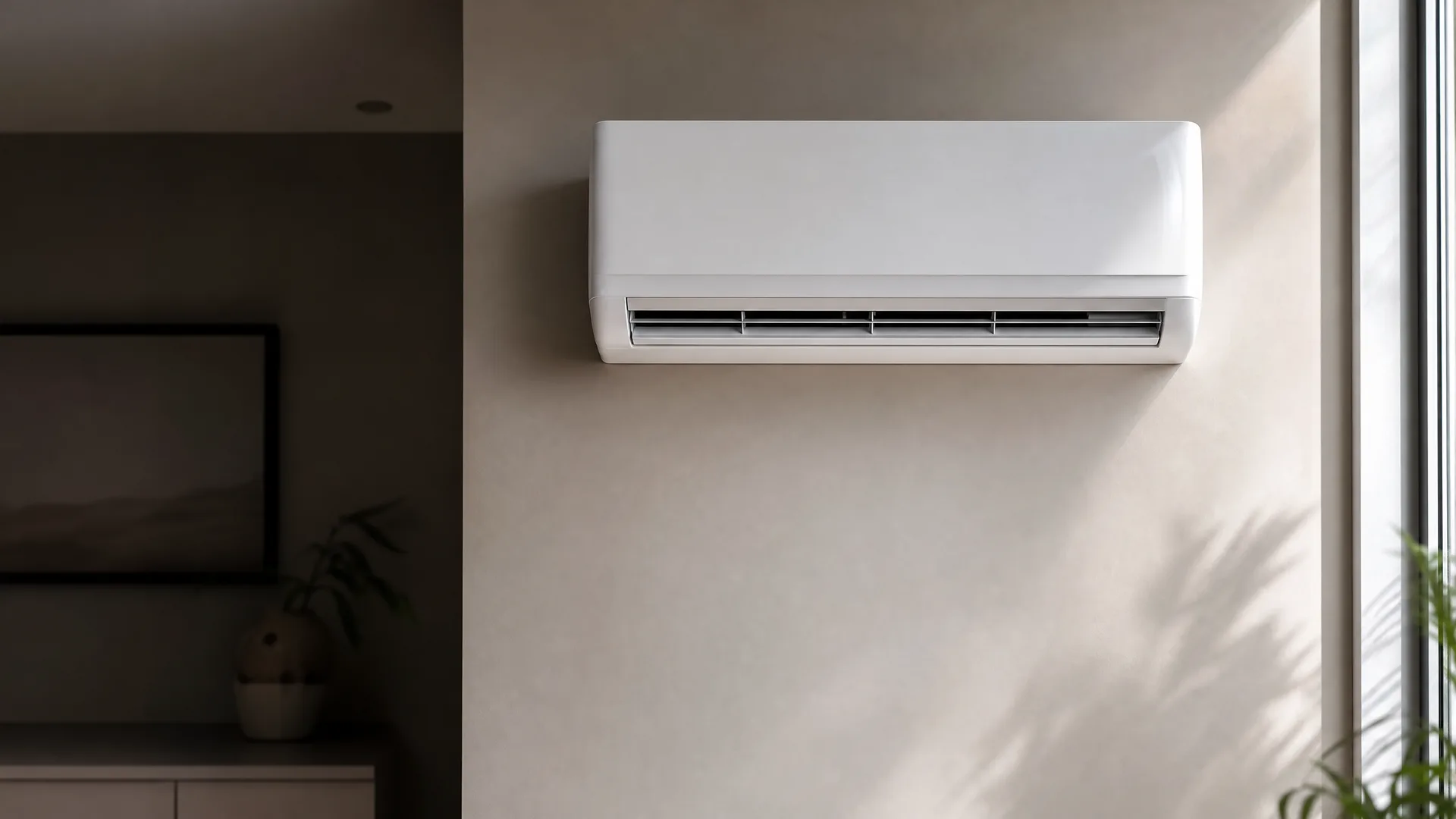
This is what a mini split should look like. No dust on the housing, no staining on the wall behind it. Switch it to heat and the air passing over that coil has nothing sitting on it to burn off.
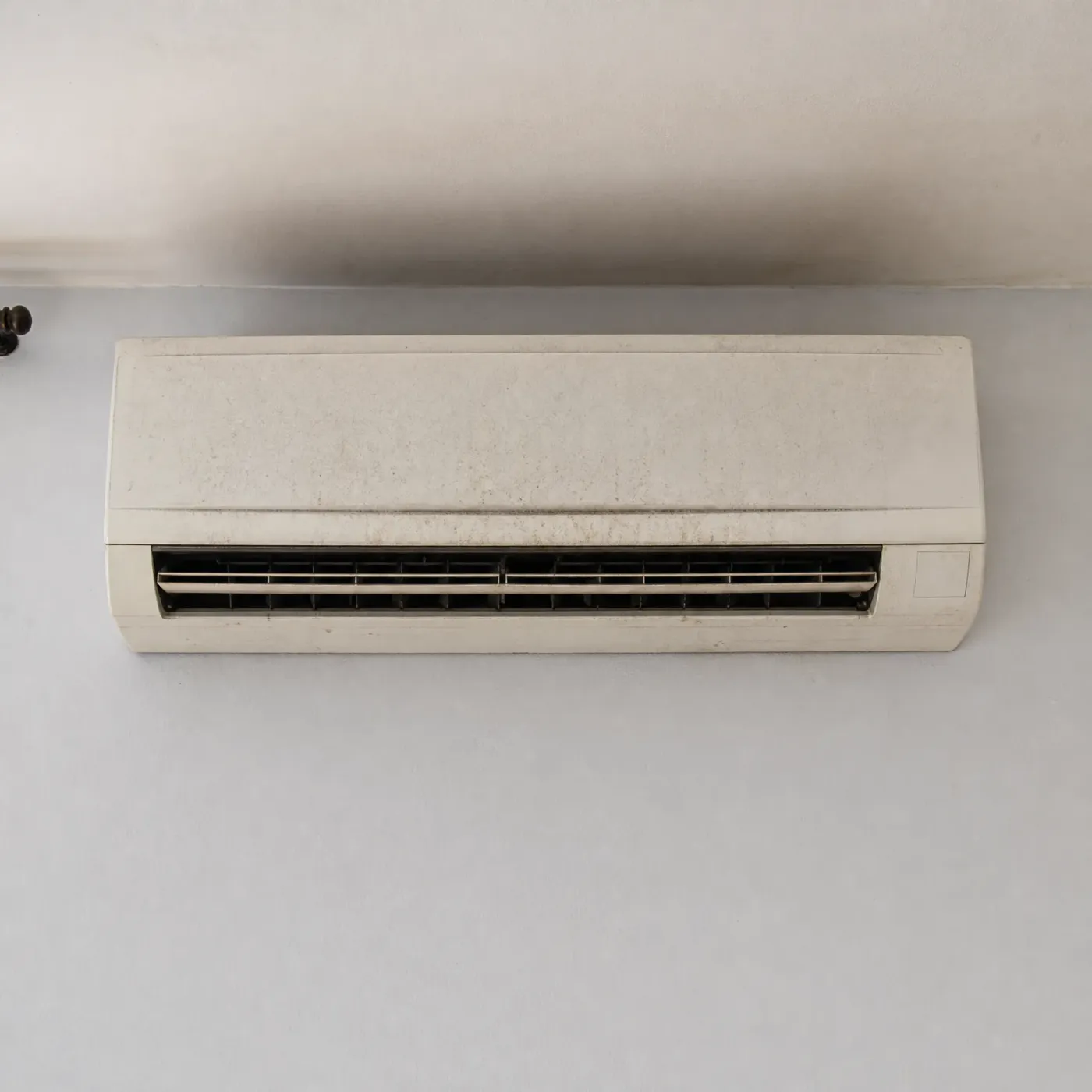
Grime like this on the housing usually means more of it built up where you can't see, on the coil and the blower wheel behind it. The dark staining on the wall points to moisture that's been draining somewhere it shouldn't.
Power here runs 13.21 cents a kilowatt-hour, so a mini split is a cheap way to clear that smell out for good. Letting a tech clean the coil and blower costs less to run than most of what else heats a house, which makes it worth fixing instead of just living with it each fall.
EIA-861 2025 statewide residential average
A mini split switches between cooling and heating with the same coil and the same blower wheel, so whatever built up during one season rides along into the other.
That's why the smell shows up the moment heat kicks on. The coil isn't making the smell, it's just the first thing warm air touches on its way to you.
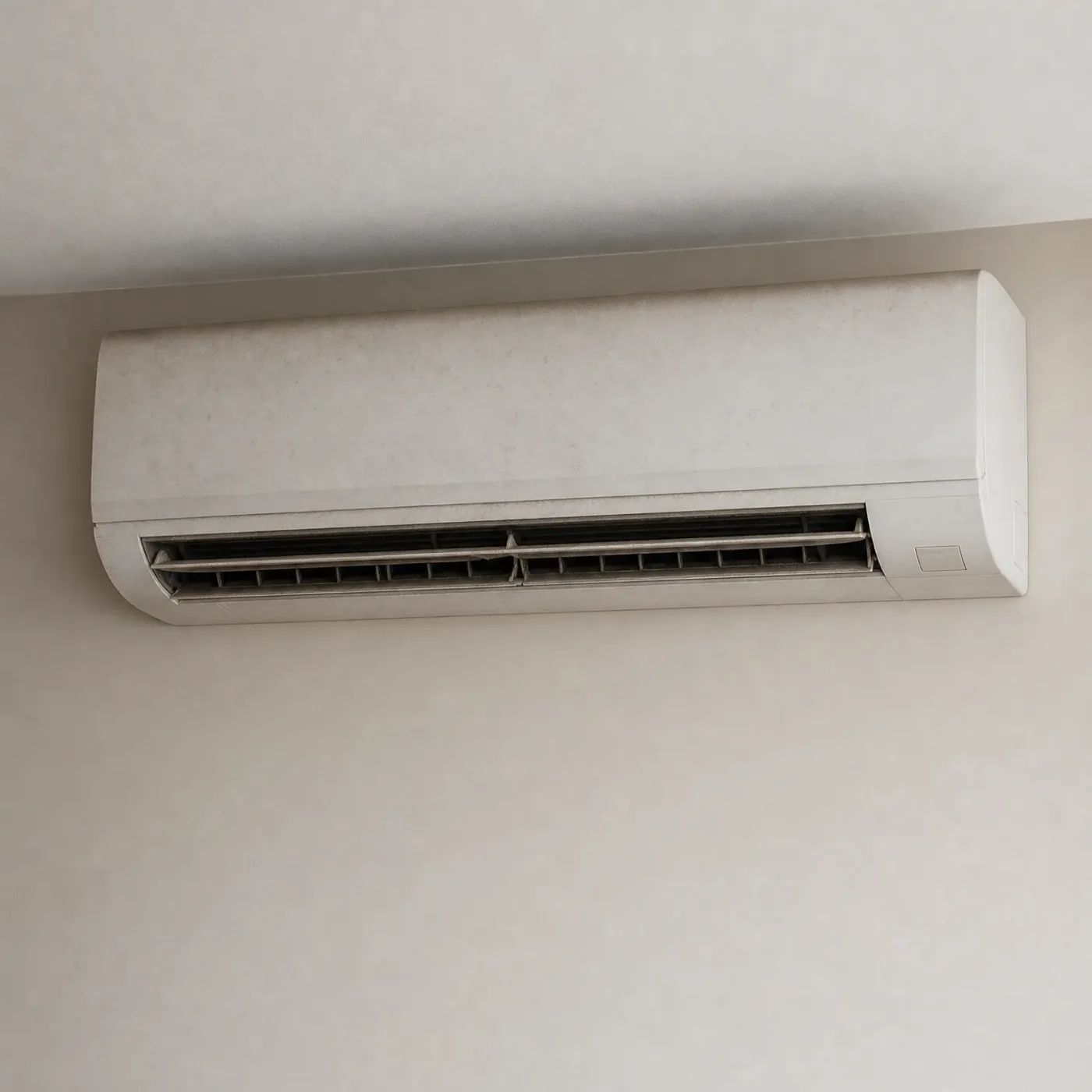

Summers here run humid, with the dew point averaging 66°F across June, July and August according to NOAA climate data. That's air so heavy with moisture that your mini split spends those months pulling water out of it nonstop, and that water has to go somewhere. Some of it lands on the coil, some drips into the drain pan, and whatever's riding in that moisture, dust, pollen, a bit of grime, settles in with it. None of that dries out fully once cooling season ends. So when the unit switches to heat, that warm air passes straight over a coil and pan that stayed damp all summer, and you get the smell. The muggier the summer, the more there is sitting in there waiting for heat to stir it loose.
NASA POWER T2MDEW county cells weighted by homes

A mini split that smells on heat is telling you what built up on the coil and in the drain pan over the summer. That's not a sign the unit is failing. It's a sign it needs the kind of cleaning a filter alone can't give it.
You could keep tracking this down yourself every October: finding someone who services mini splits, explaining the smell and when it started, waiting on quotes, picking someone and hoping they show up. Or you can skip straight to a contractor who already knows the situation, matched to what your unit needs, who calls you instead of the other way around.

A mini split pro near you